Compare 10 KYC Software Platforms for Faster Customer Verification
Compare 10 KYC Software Platforms for Faster Customer Verification
Compare 10 KYC Software Platforms for Faster Customer Verification
See which KYC software platforms stand out for document coverage, biometrics, AML screening, integrations, and fraud controls.
Author
Team Bureau


See how Bureau has helped industry leaders defend against networked Industrial-scale frauds →
Schedule a Demo
TABLE OF CONTENTS
See Less
Every unnecessary KYC review slows onboarding, but letting the wrong customer through can cost far more. When verification, AML checks, and risk reviews sit across separate systems, teams can end up losing legitimate customers while suspicious applicants still slip through.
KYC (Know Your Customer) software brings these checks into one workflow, helping teams verify genuine customers faster while giving higher-risk cases more scrutiny.
Poor onboarding controls can turn basic validation gaps into regulatory risk. In 2025, the FCA fined Monzo £21.1 million after identifying shortcomings in its customer onboarding and risk assessment systems. Some customers had even been accepted using well-known London landmarks as their addresses, exposing how easily basic validation gaps can undermine a wider KYC process.
A strong KYC software should close those gaps without adding unnecessary friction. The features below help separate basic verification tools from more complete KYC systems.
Must-Have Features in Top KYC Software
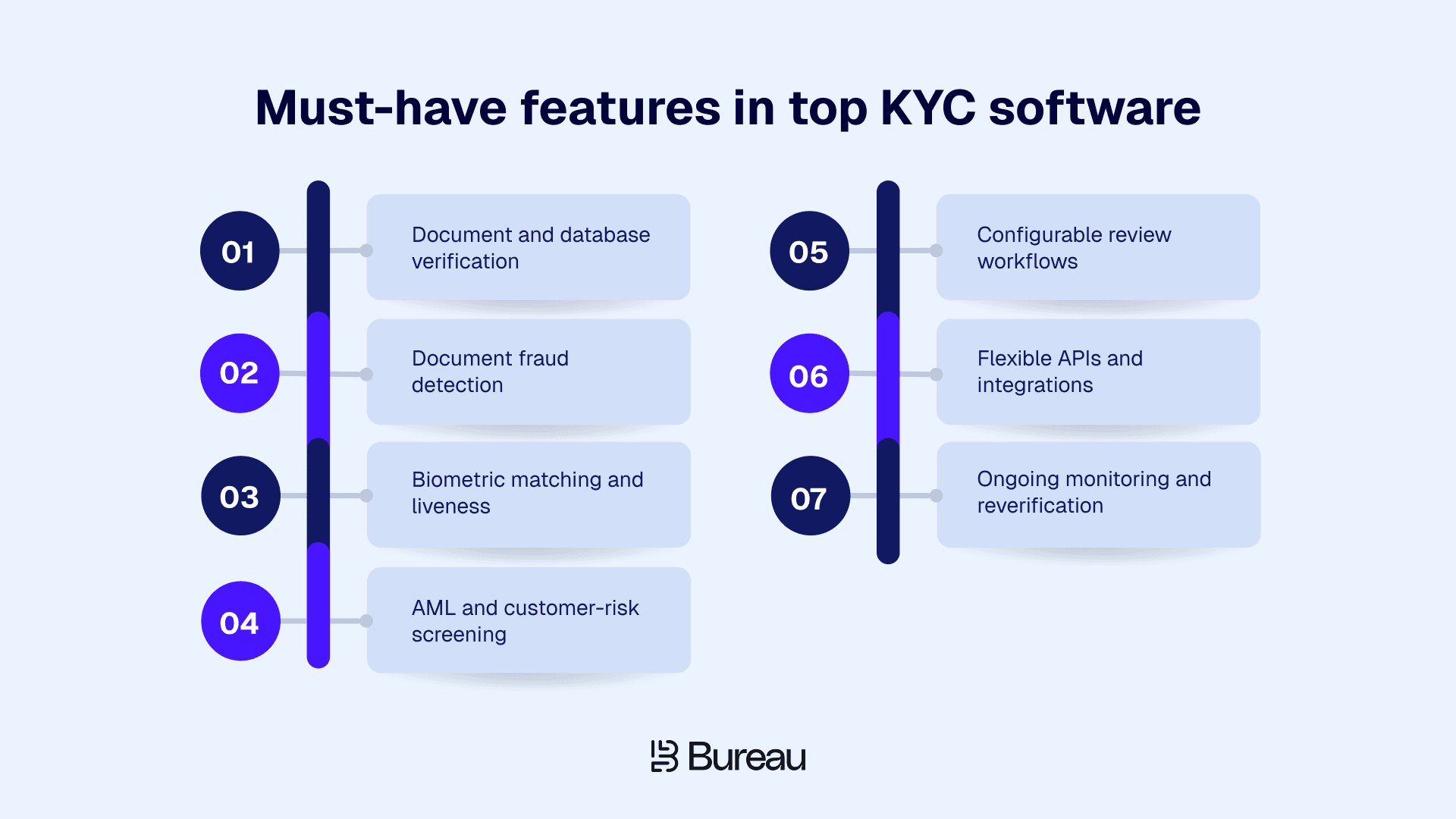
The strongest KYC software should do more than complete verification checks. It should help teams make accurate onboarding decisions and catch attempts to manipulate identity checks. Routine cases should be automated, while higher-risk applications retain enough evidence for investigation or audit.
Look for these key capabilities in KYC software vendors:
Document and database verification: Coverage should match target countries, document types, languages, scripts, and customer segments. Country, document-template, and authoritative identity-data coverage should be assessed separately.
Document fraud detection: Go beyond OCR with authenticity checks, expiry validation, and NFC support. The platform should also detect AI-generated fake IDs, photocopies, screen replays, and digitally altered IDs
Biometric matching and liveness detection: Check whether the platform supports face-to-document matching and passive or active liveness. It should also detect photos, masks, video replays, deepfakes, and injection attacks without adding too much friction.
AML and customer-risk screening: Look for sanctions and PEP screening along with adverse-media checks and risk scoring. Platforms serving business customers should also support KYB (Know Your Business) checks. Confirm whether these capabilities are native or added through partners.
Workflow and manual-review controls: Set rules for approvals, rejections, retries, step-up checks, and manual review. These rules should adapt by geography, product, customer type, or risk level while giving analysts clear evidence.
Integration flexibility: Check for REST APIs, web and mobile SDKs, hosted links, webhooks, and sandbox access. No-code controls and case-management integrations can also make the platform easier to fit into existing onboarding operations.
Ongoing monitoring and reverification: Look for periodic or event-driven reviews when documents expire, watchlist status changes, or new risk signals emerge after onboarding.
For higher-risk use cases, these KYC capabilities are only the starting point. Device, behavioral, duplicate-identity, and network signals can reveal applicants that pass verification but remain connected to synthetic identities, mule accounts, repeat devices, or fraud networks.
KYC Software Comparison: Top Providers at a Glance
The strongest KYC software combines reliable identity verification with fraud controls, compliance screening, and flexible onboarding workflows. Coverage figures still need context, since vendors may count countries, document types, templates, or identity-data sources differently.
Here is how the leading KYC providers compare across the capabilities that matter most during vendor evaluation:
KYC Provider | Document Coverage | Liveness Detection | AML Screening Depth | Integration Flexibility | Best For |
Bureau | 2,000+ document types across 195+ regions | Selfie liveness with deepfake detection; can be combined with device and behavioral intelligence. | Continuous AML/PEP screening, adverse media, and 3,000+ watchlists. | APIs, SDKs, no-code workflows, configurable orchestration | KYC with onboarding risk decisioning |
iDenfy | 3,000+ identity documents with broad global verification support | Passive and 3D active liveness with face matching. | Sanctions, PEPs, adverse media, risk assessment, and ongoing monitoring. | APIs, mobile SDKs, webhooks, hosted flows, sandbox | Automated KYC with human review |
Sumsub | Broad document verification coverage across major identity document types | Face matching, liveness, and deepfake/fraud defenses. | AML screening and ongoing compliance capabilities, including AML transaction monitoring. | APIs, SDKs, webhooks, workflow and case-management tooling | KYC, KYB, AML, and lifecycle compliance |
Trulioo | 14,000+ document types plus 450+ identity data sources | Passive biometric checks with deepfake and injection-attack detection. | Sanctions, PEP, and adverse-media watchlist screening integrated with KYC and KYB verification. | API-led, modular verification services | Cross-border identity verification |
Veriff | 12,500+ identity documents with broad international verification coverage | Biometric liveness verification for live-person detection. | PEP, sanctions, adverse-media screening, and ongoing monitoring.
| APIs, SDKs and configurable verification flows | Document and biometric identity verification |
Persona | Government IDs supported alongside configurable verification sources | Selfie verification with face comparison and liveness can be incorporated into configurable flows. | Sanctions, PEP, and adverse-media screening with continuous monitoring and configurable workflow decisioning. | APIs and highly configurable workflow orchestration | Highly configurable KYC workflows |
Jumio | Broad government-ID verification coverage | Biometric liveness with spoof, injection-attack, and deepfake defenses. | Sanctions, PEP, and adverse-media screening with ongoing monitoring. | APIs, SDKs and enterprise verification journeys | Regulated enterprise onboarding |
Entrust IDV (formerly Onfido) | 2,500+ documents across 195 countries | Biometric liveness verification with presentation-attack, deepfake, and injection defenses. | Sanctions, PEP, adverse-media and AML watchlist screening with ongoing monitoring. | APIs, SDKs and configurable Workflow Studio | Enterprise identity verification |
HyperVerge | Document, database and regional verification methods, including India-specific KYC workflows | Passive liveness and deepfake defenses, plus face matching and Video KYC. | Sanctions, PEPs, adverse media, and ongoing AML monitoring. | 100+ APIs plus no-code workflow configuration | India/APAC digital onboarding and regulated KYC |
Signzy | 10,000+ document formats with broad international KYC coverage | Active and passive liveness, face matching, and deepfake detection. | PEP, sanctions, adverse-media screening, and ongoing monitoring. | API-led banking and compliance workflows | Banking KYC and AML workflows |
Headline coverage should still be treated as a starting point. The stronger comparison comes from checking whether each provider supports the specific documents, local verification methods, AML controls, and integration paths required in priority markets.
How the Top 10 KYC Platforms Were Evaluated
These 10 KYC platforms were evaluated across four areas that directly affect onboarding performance: document coverage, liveness detection, AML screening depth, workflow and integration flexibility.
That operational fit matters because 1LoD’s 2025 Financial Crime Benchmarking study found that 60% of banks rely on manual intervention for more than half of their AML/KYC processes. That makes automation and integration just as important to assess as verification and screening capabilities.
Here is what was assessed within each area:
Document coverage: The comparison looked at whether providers support the countries and document types their customers are likely to encounter. Local identity sources and regional methods such as Aadhaar, eID, NFC, and Video KYC were also considered.
Liveness detection quality: Platforms were assessed on how reliably they can confirm that the applicant is physically present. The review also considered defenses against deepfakes, replays, masks, presentation attacks, and injection attempts.
AML screening depth: The comparison looked beyond basic PEP and sanctions screening. It also considered adverse-media checks, customer risk scoring, ongoing monitoring, alert handling, and the depth of post-onboarding compliance controls.
Workflow and integration flexibility: Platforms were assessed on how easily teams can configure approval paths and automate routine decisions. API support, SDKs, hosted flows, webhooks, sandbox access, and no-code controls were also considered when evaluating implementation fit.
Together, these criteria make it easier to separate broad product claims from the capabilities that will actually affect onboarding quality, compliance operations, and implementation effort.
Related Read: How iGaming Platforms Can Balance KYC Compliance With Player Experience
10 Best KYC Software Providers in 2026
Below are 10 KYC software providers worth evaluating based on document coverage, liveness detection quality, AML screening depth, and integration flexibility.
1. Bureau
Bureau provides KYC, KYB, and AML capabilities for businesses that need to verify applicants and manage onboarding risk across digital journeys. It enables teams to handle verification, review, and risk decisions within one platform, reducing the need to switch between separate tools.
Bureau combines identity results with behavioral biometrics, graph intelligence, and transaction signals. This helps risk teams assess synthetic identities, linked accounts, mule activity, and other fraud patterns that may remain hidden when KYC checks are evaluated in isolation.
Key strengths:
Connected KYC and fraud decisioning: Identity checks can be evaluated alongside device, behavioral, network, and transaction signals so higher-risk applicants do not appear clean simply because a document passes verification.
Device intelligence: Bureau analyzes device-level risk signals to identify suspicious reuse, emulators, rooted devices, spoofed environments, and other patterns associated with repeat or coordinated abuse.
Behavioral biometrics: Interaction patterns can help surface bots, impersonation, account misuse, or abnormal behavior that may not appear in static identity data.
Graph intelligence: Bureau’s Graph Identity Network maps relationships between identities, devices, phone numbers, emails, accounts, and other signals to identify mule networks, synthetic identities, and fraud rings.
Configurable decisioning: Risk teams can define approval, rejection, review, retry, and step-up flows based on contextual risk without rebuilding the onboarding journey for every policy change.
Lifecycle coverage: KYC decisions can connect with downstream authentication and transaction-risk workflows rather than remaining isolated at onboarding.
Bureau KYC comparison:
Document coverage and liveness: Bureau supports international identity verification with biometric matching and liveness checks that also help detect deepfakes and other spoofing attempts.
AML screening and integration: It supports PEP screening and customer-risk assessment through configurable KYC and AML workflows that connect with APIs, SDKs, Quick Links, and review controls.
Case Study: How Bureau Helped an Insurer Cut Fraud and Speed Up Onboarding by 30%
A leading insurer was struggling with fraudulent applications submitted by internal field agents, including cases involving misused customer data and synthetic identities. Existing SMS- and email-based checks added friction for genuine applicants without reliably stopping the abuse.
The insurer implemented Bureau’s identity verification and risk decisioning capabilities to assess applications using identity, device, and behavioral signals. This helped flag suspicious submissions earlier while allowing genuine customers to move through onboarding with less friction.
Within the first week, the insurer was able to:
Detect and correct 100+ fraudulent or inaccurate applications.
Reduce complaints linked to unauthorized applications.
Cut onboarding time by 30%, helping improve conversion and customer experience.
Identify suspicious applications closer to the source instead of relying on downstream reviews.
Read the full case study here → Insurer Cuts Fraud for 30% Faster Onboarding
The case shows how Bureau can combine identity, device, and behavioral risk signals to challenge suspicious applications selectively, instead of adding the same verification burden to every applicant.
Use case fit: Bureau is best suited to fintechs and other high-risk digital businesses that need KYC and fraud decisioning connected across onboarding and the wider customer lifecycle.
Pricing model: Custom pricing based on deployment scope, transaction or onboarding volume, markets covered, and the identity, fraud, compliance, and workflow capabilities required.
What to consider:
Bureau is better suited to teams that need KYC connected with fraud and risk decisioning than to businesses looking only for a lightweight document-verification API.
Document coverage, regional methods, and required workflows should still be tested against the actual customer mix and markets being served.
2. iDenfy
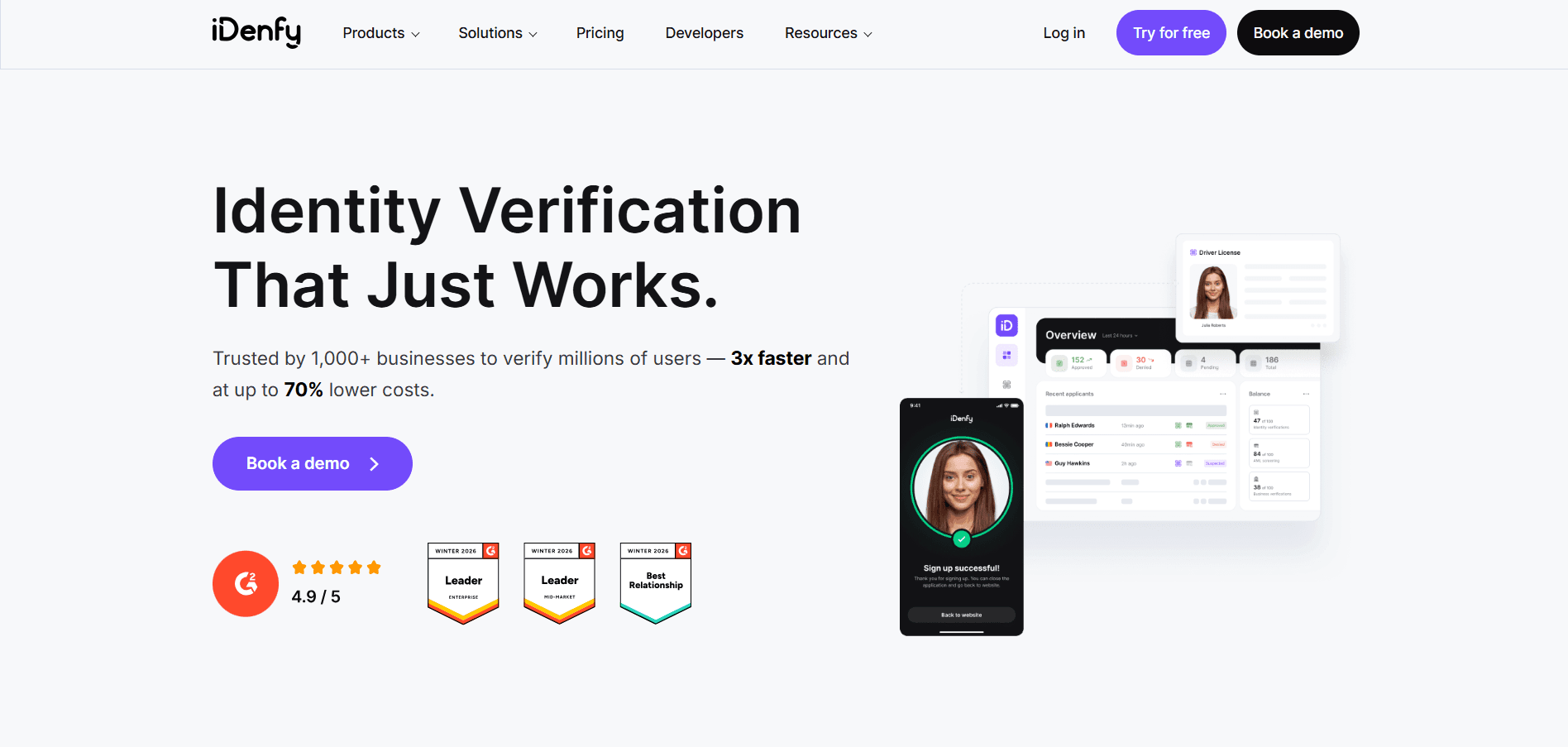
iDenfy is a KYC, KYB, and AML provider that combines automated identity verification with human-supervised review. Its hybrid model can be useful for businesses that regularly encounter difficult documents, edge cases, or verification outcomes that need analyst intervention rather than fully automated handling.
Key strengths:
Hybrid verification model: Automated checks are backed by human review, giving teams a way to resolve uncertain document or biometric cases without relying only on machine decisions.
Broad identity verification coverage: iDenfy supports international identity documents and government-issued IDs, which helps businesses maintain a more consistent verification process across multiple customer markets.
Flexible liveness options: Passive and active 3D liveness let teams apply different levels of biometric assurance depending on risk, while still keeping customer effort manageable.
KYC, KYB, and AML coverage: Identity verification can be combined with business checks and AML screening, helping reduce fragmentation across individual and corporate onboarding workflows.
Multiple deployment paths: APIs, SDKs, dashboard controls, and plugins give teams more flexibility in how verification is embedded into existing onboarding and review processes.
iDenfy KYC comparison:
Document coverage and liveness: iDenfy combines international document verification with biometric matching plus passive and active liveness options, while manual review can support uncertain document cases.
AML screening and integration: The platform supports configurable AML checks with ongoing monitoring, while APIs and SDKs help connect verification and review workflows to existing onboarding systems.
Use case fit: Fintech, crypto, gaming, and ecommerce teams may find iDenfy useful when automated KYC needs to be backed by human review for difficult or higher-risk cases.
Pricing model: iDenfy advertises approved-verification pricing, with current plans starting from $135 per month and verification pricing varying by plan and volume. AML, KYB, ongoing monitoring, and other modules should be checked separately during procurement.
What to consider:
The hybrid review model can add value in edge cases, but buyers should assess how manual reviews affect turnaround times and how rejected or repeated checks are billed.
A reviewer pointed out that automated verification decisions could provide more detailed explanations, as greater transparency would make internal investigations faster and easier to resolve.
3. Sumsub
Sumsub is a full-cycle compliance platform that combines identity verification, KYB, AML screening, transaction monitoring, fraud prevention, and case management in one environment. It is designed for businesses that want customer onboarding and ongoing compliance to stay connected rather than operating through separate tools, with support for document verification across multiple regions.
Key strengths:
Full-cycle compliance coverage: Sumsub connects KYC, KYB, AML screening, transaction monitoring, and fraud prevention so onboarding and post-onboarding risk stay within one platform.
Broad identity verification options: Document verification can sit alongside non-documentary checks and reusable KYC, giving teams more flexibility across different markets and customer journeys.
Biometric fraud controls: Face matching and liveness checks are combined with deepfake detection to help identify spoofing attempts before an applicant clears verification.
Strong AML workflow depth: Screening can extend into ongoing monitoring and transaction controls, while case management gives investigators one place to review alerts, document findings, and manage escalations.
Configurable orchestration: Workflow Builder and API-led integrations let teams define verification conditions, triggers, and downstream actions, which helps adapt onboarding flows across products, markets, and risk levels.
Sumsub KYC comparison:
Document coverage and liveness: Sumsub combines international document verification with authenticity checks, face matching, liveness detection, and deepfake defenses for higher-assurance onboarding.
AML screening and integration: AML screening can connect with transaction monitoring and case management, while APIs and workflow tools support configurable KYC and compliance journeys.
Use case fit: A practical choice for crypto, payments, fintech, and trading platforms that want KYC, KYB, AML, transaction monitoring, and case management in one compliance stack.
Pricing model: Published plans currently start at $1.35 per verification with a $149 minimum monthly commitment for the Basic tier, while AML screening, proof of address, and other capabilities can affect total cost.
What to consider:
Customer feedback highlights that greater pricing transparency and a clearer service-by-service usage breakdown would make costs easier to forecast as verification volumes scale.
Sumsub’s broad compliance stack may require more setup than a lightweight identity-verification API, especially when multiple modules and workflows are being configured.
4. Trulioo

Trulioo is a global identity verification platform built for businesses that need different KYC methods across different markets. It combines documentary verification with identity-data matching, business verification, watchlist screening, and regional data sources through one platform, making it especially useful for cross-border onboarding where a single verification method may not work everywhere.
Key strengths:
Layered verification methods: Trulioo lets teams combine document checks with identity-data matching when local regulations or available verification methods differ by market.
Integrated biometric checks: Liveness and face comparison can be added to document verification to strengthen protection against presentation attacks and spoofing.
Document and script flexibility: Trulioo supports a wide range of government-issued identity documents and character sets, helping teams handle varied formats and scripts across international onboarding.
Modular verification stack: Person verification, business checks, watchlist screening, and documentary KYC can be combined as needed, allowing different markets or customer types to follow different verification paths.
Unified integration model: Multiple verification services can sit behind one integration, which can reduce the need to build separate onboarding connections for each country or verification method.
Trulioo KYC comparison:
Document coverage and liveness: Trulioo supports 14,000+ document templates with passive liveness and face comparison, while documentary checks can be combined with identity-data verification where stronger assurance is needed.
AML screening and integration: Watchlist Screening supports sanctions, PEP, adverse-media, and ongoing monitoring, while document and data verification services can be accessed through Trulioo’s unified API.
Use case fit: Works well for cross-border fintechs, remittance providers, payment companies, and marketplaces that need different verification methods across multiple countries through one integration.
Pricing model: Trulioo uses custom pricing, with costs influenced by the markets, data sources, and verification services selected; businesses combining several verification methods should model country-level usage during procurement.
What to consider:
Trulioo’s modular approach gives teams substantial geographic flexibility, but combining data, documents, biometrics, and watchlist services can create more configuration work than a simpler verification-only deployment.
Some users report difficulties verifying rural addresses such as PO boxes or rural routes, where matching address fields to underlying records can require trial and error.
5. Veriff
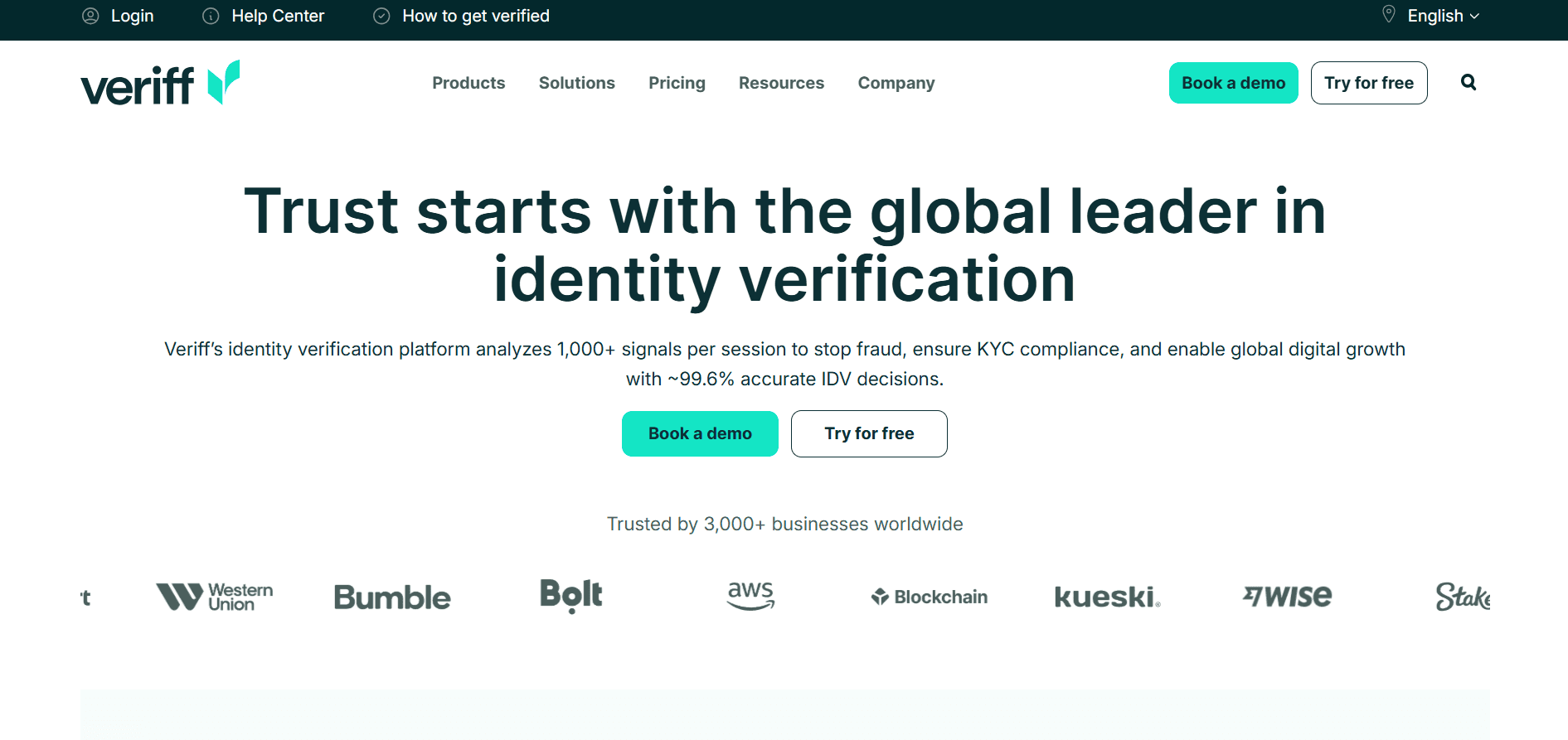
Veriff is an identity verification platform focused on document checks, facial biometrics, passive liveness, and fraud signals for digital onboarding. It supports verification across more than 230 countries and territories, making it a practical option for businesses that prioritize biometric assurance and international document coverage.
Key strengths:
Passive liveness: Veriff confirms that a real person is present without requiring extra actions, helping reduce friction while still screening for spoofing attempts.
Document authenticity checks: Veriff evaluates identity documents for signs of tampering or manipulation, helping teams distinguish genuine credentials from altered or fraudulent submissions during onboarding.
Presentation-attack detection: Its liveness models are designed to detect masks, presented screens, AI-generated selfies, and other attempts to manipulate biometric verification.
Session-level fraud context: Biometric checks can be evaluated alongside device and network risk signals, giving teams more context when a document or selfie appears legitimate but the wider session does not.
Flexible deployment: Public APIs, web flows, and native SDKs allow verification to be embedded across different onboarding journeys while supporting richer signals such as video and liveness where needed.
Veriff KYC comparison:
Document coverage and liveness: Veriff combines international document verification with face matching and passive liveness that can detect deepfakes and presentation attacks without requiring additional user actions.
AML screening and integration: Veriff supports PEP, sanctions, adverse-media, and ongoing monitoring, while APIs and native SDKs connect these checks with existing verification flows.
Use case fit: Particularly relevant for international fintechs, marketplaces, and gaming platforms where document verification, biometrics, and passive liveness are central to onboarding.
Pricing model: Veriff offers self-service and enterprise plans, with pricing varying by verification volume and the identity, AML, or fraud capabilities selected. A sandbox is available for testing integrations and user flows before production deployment.
What to consider:
Veriff is verification-led, so businesses requiring deeper transaction monitoring or broader lifecycle risk decisioning should assess whether additional tools will still be needed.
Some reviewers found that unusual documents and manual edge cases can require more customization, with clearer exception handling also cited as an area for improvement.
6. Persona
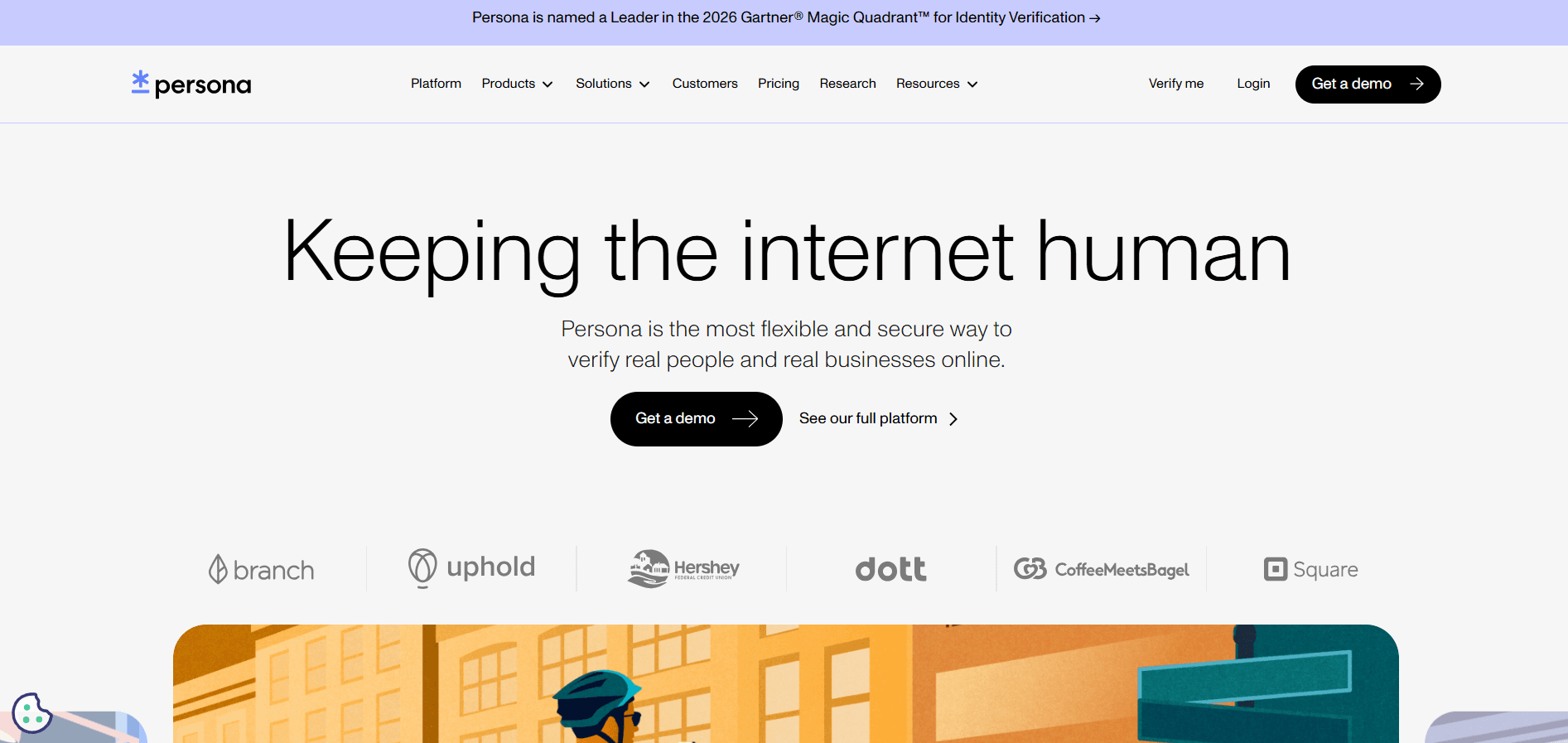
Persona is a modular identity platform built for teams that need different verification paths by customer type, market, product, or risk level. Instead of forcing every applicant through the same KYC flow, Persona lets teams combine document checks, database verification, biometrics, AML screening, KYB, and case review within configurable workflows.
Key strengths:
Highly configurable workflows: Persona lets teams apply different verification steps based on risk, geography, or customer type, helping avoid unnecessary checks for low-risk users.
KYC and KYB orchestration: Individual verification can sit alongside business verification and beneficial-owner checks, which helps multi-product teams manage consumer and business onboarding in one environment.
Multiple verification methods: Government ID checks can be combined with database verification and selfie-based liveness, giving teams more choice in how identity is established.
Flexible AML controls: Watchlist and adverse-media screening can be built into KYC workflows, while recurring screening supports ongoing monitoring after onboarding.
Modular integration model: APIs and reusable workflow components give product and compliance teams more control after implementation, while external data or fraud providers can also feed into decision logic.
Persona KYC comparison:
Document coverage and liveness: Persona supports government ID and database verification with selfie-based liveness, allowing biometric steps to be added when higher assurance is required.
AML screening and integration: Watchlist and adverse-media checks can sit inside configurable workflows that also support recurring screening, case logic, and third-party signals.
Use case fit: A good option for marketplaces and multi-product fintechs that need different KYC journeys by customer type, geography, product, or risk level.
Pricing model: Persona offers an Essential plan starting at $250 per month with a 12-month minimum term, while Growth and Enterprise plans use custom pricing for broader verification, KYB, fraud, and workflow capabilities.
What to consider:
Users raised concerns about applicants being able to submit unexpected or inappropriate images during verification, suggesting stronger upload controls could be useful.
Persona’s flexibility is most useful when teams genuinely need segmented workflows; otherwise, the additional configuration and governance can be more than a straightforward KYC deployment requires.
7. Jumio

Jumio is an enterprise identity verification and KYC platform built for regulated organizations that need document authentication, biometrics, liveness, AML screening, and ongoing identity monitoring. Its platform supports onboarding and reverification across web and mobile environments, with enterprise deployment options suited to banks, fintechs, crypto businesses, and other compliance-heavy sectors.
Key strengths:
Enterprise identity verification: Combines document checks with biometric authentication and risk signals, helping regulated businesses maintain auditability across high-volume onboarding.
Biometric assurance: Facial matching and liveness detection help confirm that the applicant is present while screening for deepfakes, spoofing, and other attempts to manipulate identity checks.
Ongoing identity intelligence: Verification can extend beyond initial onboarding, allowing businesses to reassess identity risk as customer activity changes instead of relying only on a one-time KYC decision.
AML support: Identity verification can connect with AML screening and customer-risk checks, helping compliance teams manage KYC requirements without separating identity and screening workflows completely.
Enterprise deployment options: APIs, mobile SDKs, and web-based implementations give teams flexibility in how verification is embedded, while support options are available for larger production environments.
Jumio KYC comparison:
Document coverage and liveness: Jumio supports international document authentication with face matching and liveness checks designed to identify spoofing and advanced biometric attacks.
AML screening and integration: KYC workflows can incorporate AML screening and risk assessment, while APIs and SDKs support embedded verification across web and mobile journeys.
Use case fit: Strong fit for banks, large fintechs, crypto platforms, and regulated digital businesses that need enterprise-grade identity verification across onboarding and ongoing customer activity.
Pricing model: Jumio does not publish standard verification pricing on its main product pages, so enterprise buyers should request custom pricing based on verification volume, deployment requirements, and selected identity or AML capabilities.
What to consider:
Jumio’s enterprise scope may be more than smaller teams need, particularly when the requirement is limited to straightforward document verification rather than ongoing identity and compliance workflows.
Some users report that facial recognition and ID scans can be sensitive to lighting conditions, which may require users to retry verification in a better-lit environment.
8. Entrust IDV (formerly Onfido)
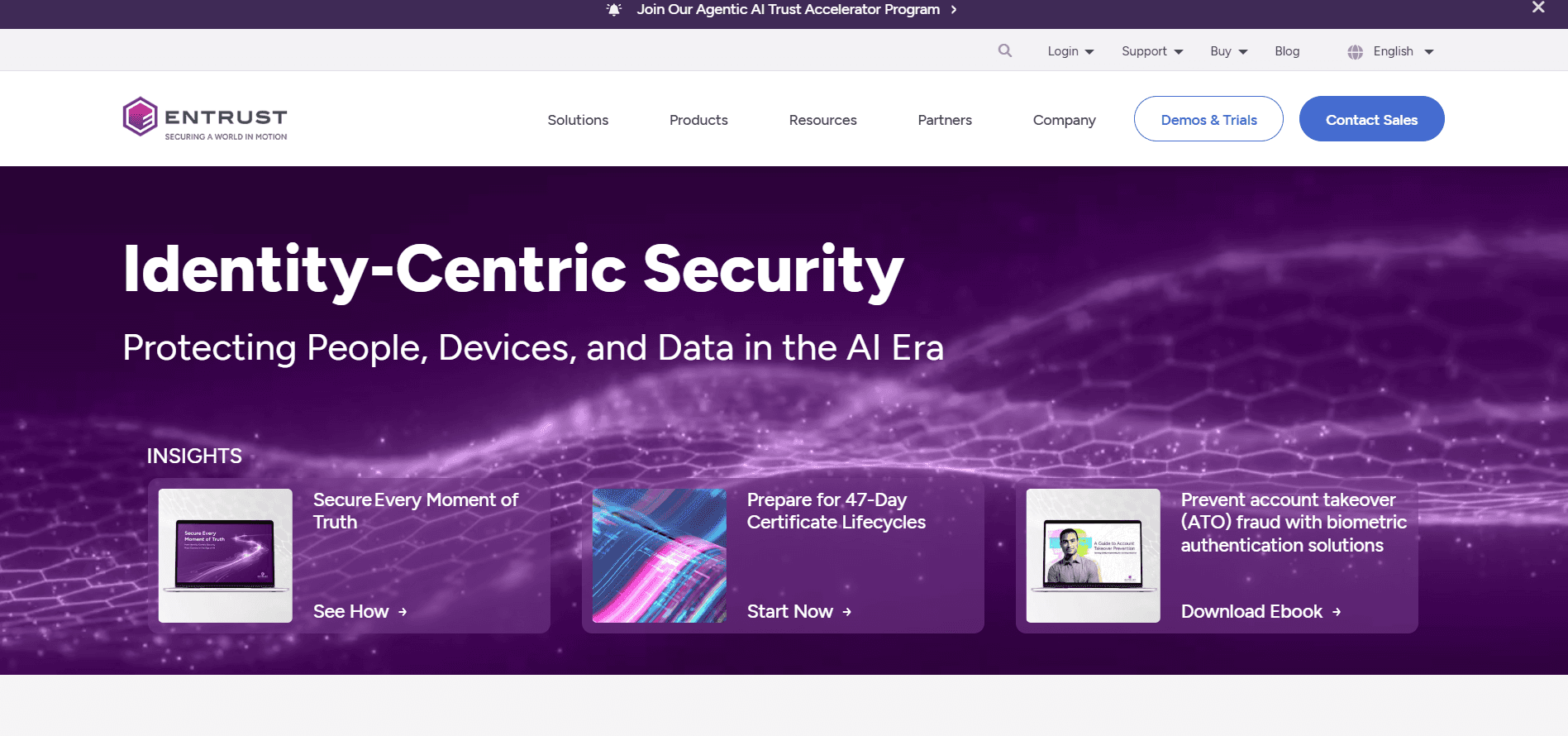
Entrust IDV is the identity verification business formerly known as Onfido, which Entrust acquired in 2024. The platform now sits within Entrust’s broader identity-security portfolio, combining document verification, facial biometrics, liveness, authentication, and configurable verification workflows for enterprise onboarding.
Key strengths:
Enterprise identity verification: Document checks and facial biometrics can be combined within one onboarding flow, helping larger organizations standardize identity verification across regulated customer journeys.
Biometric authentication: Facial verification can extend beyond onboarding into reauthentication, helping businesses confirm returning users without rebuilding a separate identity process.
Configurable verification flows: Workflow Studio allows teams to build verification journeys around different customer or risk requirements, reducing the need to hard-code every change.
Data verification options: Identity-document checks can be supplemented with trusted data sources, giving teams another way to validate customer information where documentary checks alone are insufficient.
Broader identity ecosystem: Entrust IDV can sit alongside authentication and credential capabilities from the wider Entrust portfolio, which may simplify procurement for enterprises already using its identity products.
Entrust IDV KYC comparison:
Document coverage and liveness: Entrust IDV combines international document authentication with facial biometrics and liveness checks designed to detect spoofing and presentation attacks.
AML screening and integration: KYC workflows can connect with data and compliance checks, while APIs, SDKs, and Workflow Studio support configurable verification across web and mobile journeys.
Use case fit: Most relevant for Indian banks, NBFCs, insurers, and fintechs that need PAN, Aadhaar, Video KYC, and other regional verification methods.
Pricing model: Entrust does not publish standard IDV pricing, so buyers should request custom quotes based on verification volume, deployment scope, and the identity or compliance capabilities required.
What to consider:
Some reviewers found that the platform does not support setting up child accounts for each client, which may be limiting for businesses managing multiple customer environments.
Entrust’s wider identity portfolio may be more than teams need when the requirement is limited to straightforward KYC, and buyers should confirm which AML or monitoring capabilities require separate products or integrations.
9. HyperVerge
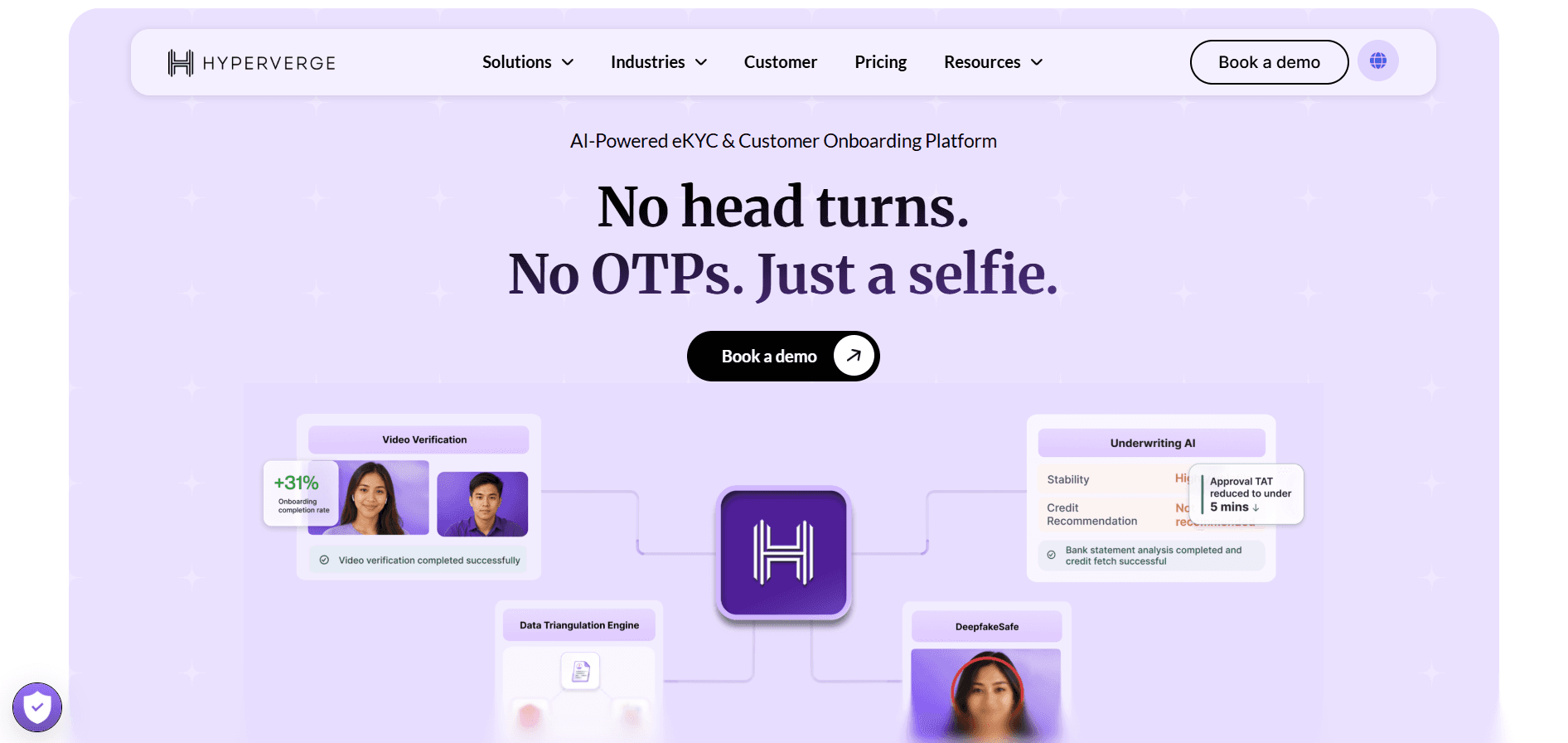
HyperVerge is an AI-driven identity verification and onboarding platform with a strong focus on regulated banking and fintech workflows in India and APAC. It combines OCR-led document checks with facial matching, passive liveness, Video KYC, and fraud controls designed for digital onboarding across financial services.
Key strengths:
India-focused onboarding workflows: HyperVerge supports regional verification methods such as PAN, Aadhaar, and Video KYC, helping regulated teams adapt onboarding to local compliance requirements.
OCR-led document verification: Document extraction and authenticity checks help teams validate submitted IDs while reducing manual data entry during high-volume onboarding.
Passive liveness and face matching: Biometric checks can confirm user presence without adding excessive interaction, while duplicate-face and spoofing controls help identify suspicious submissions.
Video KYC support: Regulated onboarding journeys can include agent-assisted Video KYC, giving banks and fintechs a higher-assurance path for customers who require additional verification.
Fraud-focused identity checks: Deepfake and document-forgery defenses add another layer around identity verification, helping teams detect manipulated documents or biometric attempts before approval.
HyperVerge KYC comparison:
Document coverage and liveness: HyperVerge combines India-focused document and database checks with OCR, facial matching, passive liveness, and Video KYC for regulated onboarding.
AML screening and integration: AML and watchlist checks can sit alongside configurable onboarding workflows, while APIs support integration across mobile and web verification journeys.
Use case fit: HyperVerge is a strong fit for Indian banks, NBFCs, insurers, and fintechs that need identity verification and Video KYC aligned with regional onboarding requirements.
Pricing model: HyperVerge uses custom pricing based on verification volume, deployment scope, markets covered, and the identity or compliance capabilities selected.
What to consider:
HyperVerge’s regional strengths make it well suited to India and APAC, but international buyers should test document coverage and downstream fraud capabilities against the markets being served.
Some users report that the newly introduced seven-second agent-acceptance timer can feel restrictive during Video KYC workflows, with a longer window suggested to give agents more flexibility.
Related Read: Top HyperVerge Alternatives for KYC, Onboarding, and Fraud Prevention
10. Signzy
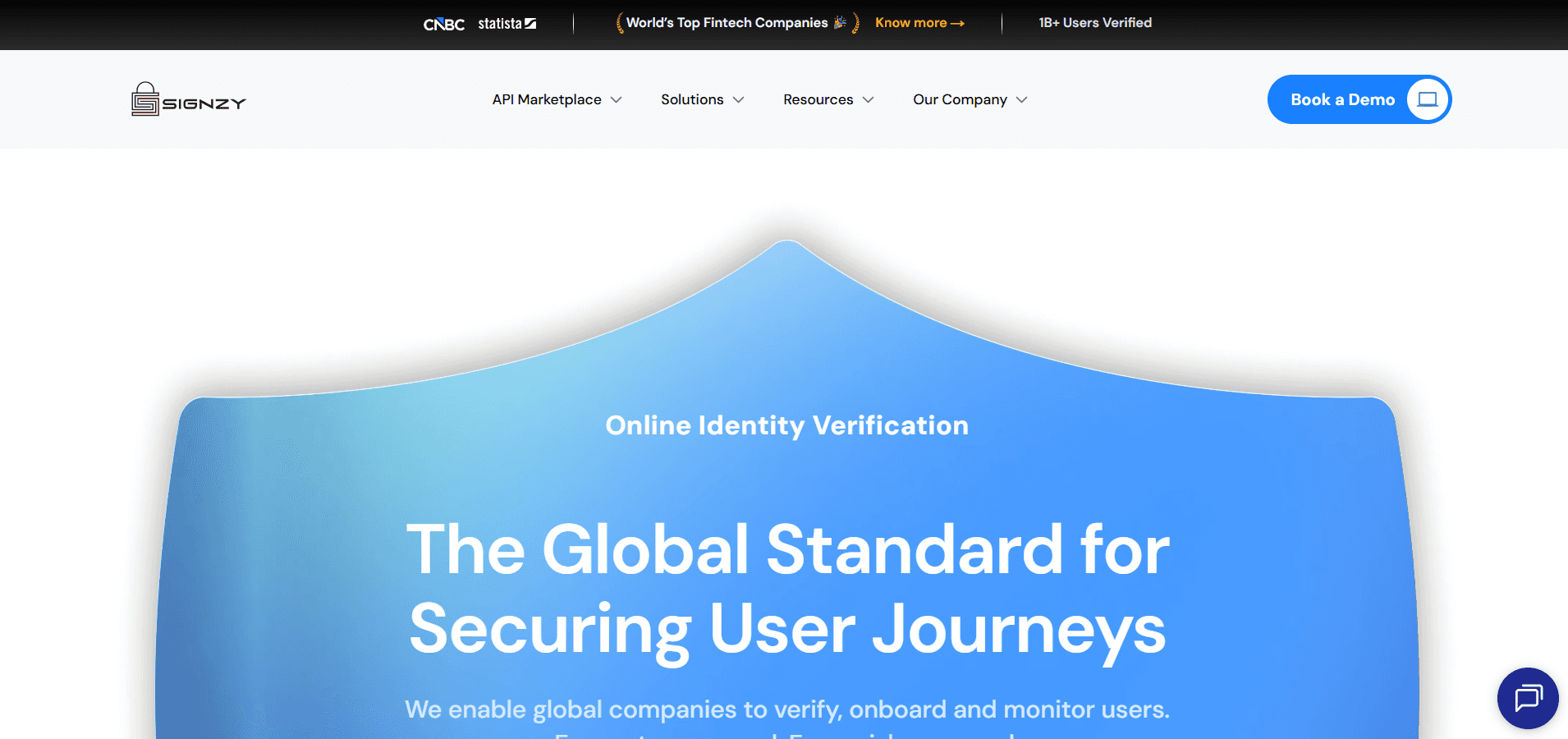
Signzy is a KYC, KYB, AML, and banking-workflow platform built for financial institutions that need identity verification and compliance automation within regulated onboarding journeys. Its focus on regional banking integrations and modular workflows can make it useful for institutions that want to connect verification with Video KYC, business checks, digital agreements, and downstream compliance processes.
Key strengths:
Regional banking workflows: Signzy combines identity verification with banking-specific onboarding flows, helping financial institutions reduce the number of separate integrations needed for regulated customer journeys.
Document and data checks: Document intelligence can work alongside regional databases and banking-data sources, giving teams more options when verification cannot rely on documents alone.
Video KYC and biometrics: Face matching and liveness checks can be incorporated into Video KYC flows, supporting higher-assurance onboarding where regulated or risk-based verification is required.
Broad compliance stack: KYC can extend into KYB, AML screening, and transaction monitoring, helping institutions connect onboarding controls with later compliance activity.
Modular workflow automation: APIs and configurable banking workflows allow teams to add verification or compliance modules as requirements grow without replacing the entire onboarding stack.
Signzy KYC comparison:
Document coverage and liveness: Signzy combines regional document and data verification with face matching, liveness checks, and Video KYC for regulated financial onboarding.
AML screening and integration: PEP and sanctions checks can sit alongside broader AML workflows, while APIs and modular controls support integration with banking and compliance systems.
Use case fit: Designed primarily for banks, financial institutions, and India or APAC fintechs that want KYC, Video KYC, AML, and banking workflows connected in one stack.
Pricing model: Pricing is typically customized around deployment scope, API usage, selected compliance modules, and the markets or banking workflows required.
What to consider:
One reviewer mentioned that time-zone differences can occasionally slow support responses, although they still described the support team as responsive when issues arise.
Signzy’s regional banking strength may be more valuable in supported markets than for businesses planning broad global expansion, so document coverage and data-source availability should be checked country by country.
How to Choose the Right KYC Software
The right KYC software should perform well against the customers, documents, markets, and risk policies it will encounter in production. A long feature list carries little value if verification produces excessive retries, misses identity fraud, or requires significant integration work in priority markets. Selection should therefore focus on measurable performance within the actual onboarding environment.
Capgemini’s World Retail Banking Report 2025 found that 75% of surveyed bank marketers faced delays in verifying customer identities during onboarding. Buyers should therefore test how quickly and reliably a platform handles actual customer journeys, not just whether it supports the required checks.
The following questions can turn vendor claims into concrete procurement requirements:
Evaluation Area | Questions Buyers Should Ask | Products to Consider |
Liveness and biometrics | Does the platform support strong liveness and face matching without creating excessive user friction? | Bureau, Jumio, Veriff |
Document verification | Can the platform detect tampering, replays, expired IDs, unsupported documents, and AI-generated forgeries? | Bureau, Veriff, HyperVerge, Trulioo |
Customer and market coverage | Are priority countries, document types, local databases, and customer segments supported? | Trulioo, Sumsub, Entrust IDV |
AML and ongoing monitoring | Are PEP, sanctions, adverse-media, customer-risk, and rescreening workflows built into the platform? | Sumsub, Signzy, Persona |
Identity fraud controls | Can identity results be combined with device, behavioral, duplicate-identity, or network signals? | Bureau, Sumsub, HyperVerge |
Workflow and integration | Can teams configure risk-based flows through APIs, SDKs, webhooks, or no-code controls? | Persona, Signzy, iDenfy |
Manual review and operations | How are exceptions handled, what evidence reaches analysts, and how quickly can cases be resolved? | iDenfy, Bureau, Jumio |
Product recommendations indicate category fit rather than an overall ranking. Final selection should be validated through a proof of concept using representative customer and fraud scenarios.
Related Read: 9 Best Identity Verification Solutions for Secure Digital Onboarding
Move Beyond Standalone KYC Checks
A well-designed KYC setup should make onboarding easier for genuine customers while giving risk teams more control over suspicious applications. That becomes especially important when identity checks alone cannot explain the full risk behind an applicant.
Bureau is built for that kind of risk-based onboarding. Identity verification can sit alongside device, behavioral, and graph signals, helping teams decide when to approve, step up, review, or block an application based on its wider context.
This gives businesses a KYC process that is less dependent on blanket checks and more responsive to actual risk. Genuine applicants can move through faster, while higher-risk cases receive the scrutiny they need.
To see how this approach could fit existing onboarding workflows, schedule a demo with Bureau today.
FAQs
1. What is the best KYC software in 2026?
The best KYC software depends on geography, industry, customer type, fraud exposure, and integration needs. Providers such as Bureau, iDenfy, Sumsub, Trulioo, Veriff, Persona, Jumio, Entrust IDV, HyperVerge, and Signzy differ across verification, workflow, compliance, and risk-decisioning depth.
2. What features should KYC software include?
KYC software should cover identity verification, biometrics, AML screening, risk scoring, audit trails, monitoring, manual review, and integrations for onboarding. Higher-risk businesses should also assess device, behavioral, and network intelligence.
3. What is the difference between KYC and AML software?
KYC software focuses on verifying customer identity and assessing initial risk, while AML software covers the broader prevention of money laundering and financial crime. AML platforms may also include transaction monitoring, sanctions screening, investigations, ongoing monitoring, and regulatory reporting.
4. What is automated KYC?
Automated KYC uses software to collect and verify customer information through document analysis, authoritative databases, biometrics, liveness checks, screening, and risk rules. Low-risk applicants can be approved automatically, while uncertain or higher-risk cases are escalated for manual review.
5. How much does KYC software cost?
KYC software may charge per attempt, completed verification, approved customer, monthly platform usage, or selected modules. Additional fees can apply for AML, KYB, monitoring, or manual review, so cost per approved genuine customer is usually a more useful comparison.
6. Which KYC software is best for banks and fintechs?
There is no single best KYC platform for every bank or fintech. Teams should prioritize regulatory coverage, verification depth, AML controls, auditability, and integration flexibility; teams facing synthetic identities or post-onboarding fraud may also consider Bureau for connected risk signals.
Every unnecessary KYC review slows onboarding, but letting the wrong customer through can cost far more. When verification, AML checks, and risk reviews sit across separate systems, teams can end up losing legitimate customers while suspicious applicants still slip through.
KYC (Know Your Customer) software brings these checks into one workflow, helping teams verify genuine customers faster while giving higher-risk cases more scrutiny.
Poor onboarding controls can turn basic validation gaps into regulatory risk. In 2025, the FCA fined Monzo £21.1 million after identifying shortcomings in its customer onboarding and risk assessment systems. Some customers had even been accepted using well-known London landmarks as their addresses, exposing how easily basic validation gaps can undermine a wider KYC process.
A strong KYC software should close those gaps without adding unnecessary friction. The features below help separate basic verification tools from more complete KYC systems.
Must-Have Features in Top KYC Software
The strongest KYC software should do more than complete verification checks. It should help teams make accurate onboarding decisions and catch attempts to manipulate identity checks. Routine cases should be automated, while higher-risk applications retain enough evidence for investigation or audit.
Look for these key capabilities in KYC software vendors:
Document and database verification: Coverage should match target countries, document types, languages, scripts, and customer segments. Country, document-template, and authoritative identity-data coverage should be assessed separately.
Document fraud detection: Go beyond OCR with authenticity checks, expiry validation, and NFC support. The platform should also detect AI-generated fake IDs, photocopies, screen replays, and digitally altered IDs
Biometric matching and liveness detection: Check whether the platform supports face-to-document matching and passive or active liveness. It should also detect photos, masks, video replays, deepfakes, and injection attacks without adding too much friction.
AML and customer-risk screening: Look for sanctions and PEP screening along with adverse-media checks and risk scoring. Platforms serving business customers should also support KYB (Know Your Business) checks. Confirm whether these capabilities are native or added through partners.
Workflow and manual-review controls: Set rules for approvals, rejections, retries, step-up checks, and manual review. These rules should adapt by geography, product, customer type, or risk level while giving analysts clear evidence.
Integration flexibility: Check for REST APIs, web and mobile SDKs, hosted links, webhooks, and sandbox access. No-code controls and case-management integrations can also make the platform easier to fit into existing onboarding operations.
Ongoing monitoring and reverification: Look for periodic or event-driven reviews when documents expire, watchlist status changes, or new risk signals emerge after onboarding.
For higher-risk use cases, these KYC capabilities are only the starting point. Device, behavioral, duplicate-identity, and network signals can reveal applicants that pass verification but remain connected to synthetic identities, mule accounts, repeat devices, or fraud networks.
KYC Software Comparison: Top Providers at a Glance
The strongest KYC software combines reliable identity verification with fraud controls, compliance screening, and flexible onboarding workflows. Coverage figures still need context, since vendors may count countries, document types, templates, or identity-data sources differently.
Here is how the leading KYC providers compare across the capabilities that matter most during vendor evaluation:
KYC Provider | Document Coverage | Liveness Detection | AML Screening Depth | Integration Flexibility | Best For |
Bureau | 2,000+ document types across 195+ regions | Selfie liveness with deepfake detection; can be combined with device and behavioral intelligence. | Continuous AML/PEP screening, adverse media, and 3,000+ watchlists. | APIs, SDKs, no-code workflows, configurable orchestration | KYC with onboarding risk decisioning |
iDenfy | 3,000+ identity documents with broad global verification support | Passive and 3D active liveness with face matching. | Sanctions, PEPs, adverse media, risk assessment, and ongoing monitoring. | APIs, mobile SDKs, webhooks, hosted flows, sandbox | Automated KYC with human review |
Sumsub | Broad document verification coverage across major identity document types | Face matching, liveness, and deepfake/fraud defenses. | AML screening and ongoing compliance capabilities, including AML transaction monitoring. | APIs, SDKs, webhooks, workflow and case-management tooling | KYC, KYB, AML, and lifecycle compliance |
Trulioo | 14,000+ document types plus 450+ identity data sources | Passive biometric checks with deepfake and injection-attack detection. | Sanctions, PEP, and adverse-media watchlist screening integrated with KYC and KYB verification. | API-led, modular verification services | Cross-border identity verification |
Veriff | 12,500+ identity documents with broad international verification coverage | Biometric liveness verification for live-person detection. | PEP, sanctions, adverse-media screening, and ongoing monitoring.
| APIs, SDKs and configurable verification flows | Document and biometric identity verification |
Persona | Government IDs supported alongside configurable verification sources | Selfie verification with face comparison and liveness can be incorporated into configurable flows. | Sanctions, PEP, and adverse-media screening with continuous monitoring and configurable workflow decisioning. | APIs and highly configurable workflow orchestration | Highly configurable KYC workflows |
Jumio | Broad government-ID verification coverage | Biometric liveness with spoof, injection-attack, and deepfake defenses. | Sanctions, PEP, and adverse-media screening with ongoing monitoring. | APIs, SDKs and enterprise verification journeys | Regulated enterprise onboarding |
Entrust IDV (formerly Onfido) | 2,500+ documents across 195 countries | Biometric liveness verification with presentation-attack, deepfake, and injection defenses. | Sanctions, PEP, adverse-media and AML watchlist screening with ongoing monitoring. | APIs, SDKs and configurable Workflow Studio | Enterprise identity verification |
HyperVerge | Document, database and regional verification methods, including India-specific KYC workflows | Passive liveness and deepfake defenses, plus face matching and Video KYC. | Sanctions, PEPs, adverse media, and ongoing AML monitoring. | 100+ APIs plus no-code workflow configuration | India/APAC digital onboarding and regulated KYC |
Signzy | 10,000+ document formats with broad international KYC coverage | Active and passive liveness, face matching, and deepfake detection. | PEP, sanctions, adverse-media screening, and ongoing monitoring. | API-led banking and compliance workflows | Banking KYC and AML workflows |
Headline coverage should still be treated as a starting point. The stronger comparison comes from checking whether each provider supports the specific documents, local verification methods, AML controls, and integration paths required in priority markets.
How the Top 10 KYC Platforms Were Evaluated
These 10 KYC platforms were evaluated across four areas that directly affect onboarding performance: document coverage, liveness detection, AML screening depth, workflow and integration flexibility.
That operational fit matters because 1LoD’s 2025 Financial Crime Benchmarking study found that 60% of banks rely on manual intervention for more than half of their AML/KYC processes. That makes automation and integration just as important to assess as verification and screening capabilities.
Here is what was assessed within each area:
Document coverage: The comparison looked at whether providers support the countries and document types their customers are likely to encounter. Local identity sources and regional methods such as Aadhaar, eID, NFC, and Video KYC were also considered.
Liveness detection quality: Platforms were assessed on how reliably they can confirm that the applicant is physically present. The review also considered defenses against deepfakes, replays, masks, presentation attacks, and injection attempts.
AML screening depth: The comparison looked beyond basic PEP and sanctions screening. It also considered adverse-media checks, customer risk scoring, ongoing monitoring, alert handling, and the depth of post-onboarding compliance controls.
Workflow and integration flexibility: Platforms were assessed on how easily teams can configure approval paths and automate routine decisions. API support, SDKs, hosted flows, webhooks, sandbox access, and no-code controls were also considered when evaluating implementation fit.
Together, these criteria make it easier to separate broad product claims from the capabilities that will actually affect onboarding quality, compliance operations, and implementation effort.
Related Read: How iGaming Platforms Can Balance KYC Compliance With Player Experience
10 Best KYC Software Providers in 2026
Below are 10 KYC software providers worth evaluating based on document coverage, liveness detection quality, AML screening depth, and integration flexibility.
1. Bureau
Bureau provides KYC, KYB, and AML capabilities for businesses that need to verify applicants and manage onboarding risk across digital journeys. It enables teams to handle verification, review, and risk decisions within one platform, reducing the need to switch between separate tools.
Bureau combines identity results with behavioral biometrics, graph intelligence, and transaction signals. This helps risk teams assess synthetic identities, linked accounts, mule activity, and other fraud patterns that may remain hidden when KYC checks are evaluated in isolation.
Key strengths:
Connected KYC and fraud decisioning: Identity checks can be evaluated alongside device, behavioral, network, and transaction signals so higher-risk applicants do not appear clean simply because a document passes verification.
Device intelligence: Bureau analyzes device-level risk signals to identify suspicious reuse, emulators, rooted devices, spoofed environments, and other patterns associated with repeat or coordinated abuse.
Behavioral biometrics: Interaction patterns can help surface bots, impersonation, account misuse, or abnormal behavior that may not appear in static identity data.
Graph intelligence: Bureau’s Graph Identity Network maps relationships between identities, devices, phone numbers, emails, accounts, and other signals to identify mule networks, synthetic identities, and fraud rings.
Configurable decisioning: Risk teams can define approval, rejection, review, retry, and step-up flows based on contextual risk without rebuilding the onboarding journey for every policy change.
Lifecycle coverage: KYC decisions can connect with downstream authentication and transaction-risk workflows rather than remaining isolated at onboarding.
Bureau KYC comparison:
Document coverage and liveness: Bureau supports international identity verification with biometric matching and liveness checks that also help detect deepfakes and other spoofing attempts.
AML screening and integration: It supports PEP screening and customer-risk assessment through configurable KYC and AML workflows that connect with APIs, SDKs, Quick Links, and review controls.
Case Study: How Bureau Helped an Insurer Cut Fraud and Speed Up Onboarding by 30%
A leading insurer was struggling with fraudulent applications submitted by internal field agents, including cases involving misused customer data and synthetic identities. Existing SMS- and email-based checks added friction for genuine applicants without reliably stopping the abuse.
The insurer implemented Bureau’s identity verification and risk decisioning capabilities to assess applications using identity, device, and behavioral signals. This helped flag suspicious submissions earlier while allowing genuine customers to move through onboarding with less friction.
Within the first week, the insurer was able to:
Detect and correct 100+ fraudulent or inaccurate applications.
Reduce complaints linked to unauthorized applications.
Cut onboarding time by 30%, helping improve conversion and customer experience.
Identify suspicious applications closer to the source instead of relying on downstream reviews.
Read the full case study here → Insurer Cuts Fraud for 30% Faster Onboarding
The case shows how Bureau can combine identity, device, and behavioral risk signals to challenge suspicious applications selectively, instead of adding the same verification burden to every applicant.
Use case fit: Bureau is best suited to fintechs and other high-risk digital businesses that need KYC and fraud decisioning connected across onboarding and the wider customer lifecycle.
Pricing model: Custom pricing based on deployment scope, transaction or onboarding volume, markets covered, and the identity, fraud, compliance, and workflow capabilities required.
What to consider:
Bureau is better suited to teams that need KYC connected with fraud and risk decisioning than to businesses looking only for a lightweight document-verification API.
Document coverage, regional methods, and required workflows should still be tested against the actual customer mix and markets being served.
2. iDenfy
iDenfy is a KYC, KYB, and AML provider that combines automated identity verification with human-supervised review. Its hybrid model can be useful for businesses that regularly encounter difficult documents, edge cases, or verification outcomes that need analyst intervention rather than fully automated handling.
Key strengths:
Hybrid verification model: Automated checks are backed by human review, giving teams a way to resolve uncertain document or biometric cases without relying only on machine decisions.
Broad identity verification coverage: iDenfy supports international identity documents and government-issued IDs, which helps businesses maintain a more consistent verification process across multiple customer markets.
Flexible liveness options: Passive and active 3D liveness let teams apply different levels of biometric assurance depending on risk, while still keeping customer effort manageable.
KYC, KYB, and AML coverage: Identity verification can be combined with business checks and AML screening, helping reduce fragmentation across individual and corporate onboarding workflows.
Multiple deployment paths: APIs, SDKs, dashboard controls, and plugins give teams more flexibility in how verification is embedded into existing onboarding and review processes.
iDenfy KYC comparison:
Document coverage and liveness: iDenfy combines international document verification with biometric matching plus passive and active liveness options, while manual review can support uncertain document cases.
AML screening and integration: The platform supports configurable AML checks with ongoing monitoring, while APIs and SDKs help connect verification and review workflows to existing onboarding systems.
Use case fit: Fintech, crypto, gaming, and ecommerce teams may find iDenfy useful when automated KYC needs to be backed by human review for difficult or higher-risk cases.
Pricing model: iDenfy advertises approved-verification pricing, with current plans starting from $135 per month and verification pricing varying by plan and volume. AML, KYB, ongoing monitoring, and other modules should be checked separately during procurement.
What to consider:
The hybrid review model can add value in edge cases, but buyers should assess how manual reviews affect turnaround times and how rejected or repeated checks are billed.
A reviewer pointed out that automated verification decisions could provide more detailed explanations, as greater transparency would make internal investigations faster and easier to resolve.
3. Sumsub
Sumsub is a full-cycle compliance platform that combines identity verification, KYB, AML screening, transaction monitoring, fraud prevention, and case management in one environment. It is designed for businesses that want customer onboarding and ongoing compliance to stay connected rather than operating through separate tools, with support for document verification across multiple regions.
Key strengths:
Full-cycle compliance coverage: Sumsub connects KYC, KYB, AML screening, transaction monitoring, and fraud prevention so onboarding and post-onboarding risk stay within one platform.
Broad identity verification options: Document verification can sit alongside non-documentary checks and reusable KYC, giving teams more flexibility across different markets and customer journeys.
Biometric fraud controls: Face matching and liveness checks are combined with deepfake detection to help identify spoofing attempts before an applicant clears verification.
Strong AML workflow depth: Screening can extend into ongoing monitoring and transaction controls, while case management gives investigators one place to review alerts, document findings, and manage escalations.
Configurable orchestration: Workflow Builder and API-led integrations let teams define verification conditions, triggers, and downstream actions, which helps adapt onboarding flows across products, markets, and risk levels.
Sumsub KYC comparison:
Document coverage and liveness: Sumsub combines international document verification with authenticity checks, face matching, liveness detection, and deepfake defenses for higher-assurance onboarding.
AML screening and integration: AML screening can connect with transaction monitoring and case management, while APIs and workflow tools support configurable KYC and compliance journeys.
Use case fit: A practical choice for crypto, payments, fintech, and trading platforms that want KYC, KYB, AML, transaction monitoring, and case management in one compliance stack.
Pricing model: Published plans currently start at $1.35 per verification with a $149 minimum monthly commitment for the Basic tier, while AML screening, proof of address, and other capabilities can affect total cost.
What to consider:
Customer feedback highlights that greater pricing transparency and a clearer service-by-service usage breakdown would make costs easier to forecast as verification volumes scale.
Sumsub’s broad compliance stack may require more setup than a lightweight identity-verification API, especially when multiple modules and workflows are being configured.
4. Trulioo
Trulioo is a global identity verification platform built for businesses that need different KYC methods across different markets. It combines documentary verification with identity-data matching, business verification, watchlist screening, and regional data sources through one platform, making it especially useful for cross-border onboarding where a single verification method may not work everywhere.
Key strengths:
Layered verification methods: Trulioo lets teams combine document checks with identity-data matching when local regulations or available verification methods differ by market.
Integrated biometric checks: Liveness and face comparison can be added to document verification to strengthen protection against presentation attacks and spoofing.
Document and script flexibility: Trulioo supports a wide range of government-issued identity documents and character sets, helping teams handle varied formats and scripts across international onboarding.
Modular verification stack: Person verification, business checks, watchlist screening, and documentary KYC can be combined as needed, allowing different markets or customer types to follow different verification paths.
Unified integration model: Multiple verification services can sit behind one integration, which can reduce the need to build separate onboarding connections for each country or verification method.
Trulioo KYC comparison:
Document coverage and liveness: Trulioo supports 14,000+ document templates with passive liveness and face comparison, while documentary checks can be combined with identity-data verification where stronger assurance is needed.
AML screening and integration: Watchlist Screening supports sanctions, PEP, adverse-media, and ongoing monitoring, while document and data verification services can be accessed through Trulioo’s unified API.
Use case fit: Works well for cross-border fintechs, remittance providers, payment companies, and marketplaces that need different verification methods across multiple countries through one integration.
Pricing model: Trulioo uses custom pricing, with costs influenced by the markets, data sources, and verification services selected; businesses combining several verification methods should model country-level usage during procurement.
What to consider:
Trulioo’s modular approach gives teams substantial geographic flexibility, but combining data, documents, biometrics, and watchlist services can create more configuration work than a simpler verification-only deployment.
Some users report difficulties verifying rural addresses such as PO boxes or rural routes, where matching address fields to underlying records can require trial and error.
5. Veriff
Veriff is an identity verification platform focused on document checks, facial biometrics, passive liveness, and fraud signals for digital onboarding. It supports verification across more than 230 countries and territories, making it a practical option for businesses that prioritize biometric assurance and international document coverage.
Key strengths:
Passive liveness: Veriff confirms that a real person is present without requiring extra actions, helping reduce friction while still screening for spoofing attempts.
Document authenticity checks: Veriff evaluates identity documents for signs of tampering or manipulation, helping teams distinguish genuine credentials from altered or fraudulent submissions during onboarding.
Presentation-attack detection: Its liveness models are designed to detect masks, presented screens, AI-generated selfies, and other attempts to manipulate biometric verification.
Session-level fraud context: Biometric checks can be evaluated alongside device and network risk signals, giving teams more context when a document or selfie appears legitimate but the wider session does not.
Flexible deployment: Public APIs, web flows, and native SDKs allow verification to be embedded across different onboarding journeys while supporting richer signals such as video and liveness where needed.
Veriff KYC comparison:
Document coverage and liveness: Veriff combines international document verification with face matching and passive liveness that can detect deepfakes and presentation attacks without requiring additional user actions.
AML screening and integration: Veriff supports PEP, sanctions, adverse-media, and ongoing monitoring, while APIs and native SDKs connect these checks with existing verification flows.
Use case fit: Particularly relevant for international fintechs, marketplaces, and gaming platforms where document verification, biometrics, and passive liveness are central to onboarding.
Pricing model: Veriff offers self-service and enterprise plans, with pricing varying by verification volume and the identity, AML, or fraud capabilities selected. A sandbox is available for testing integrations and user flows before production deployment.
What to consider:
Veriff is verification-led, so businesses requiring deeper transaction monitoring or broader lifecycle risk decisioning should assess whether additional tools will still be needed.
Some reviewers found that unusual documents and manual edge cases can require more customization, with clearer exception handling also cited as an area for improvement.
6. Persona
Persona is a modular identity platform built for teams that need different verification paths by customer type, market, product, or risk level. Instead of forcing every applicant through the same KYC flow, Persona lets teams combine document checks, database verification, biometrics, AML screening, KYB, and case review within configurable workflows.
Key strengths:
Highly configurable workflows: Persona lets teams apply different verification steps based on risk, geography, or customer type, helping avoid unnecessary checks for low-risk users.
KYC and KYB orchestration: Individual verification can sit alongside business verification and beneficial-owner checks, which helps multi-product teams manage consumer and business onboarding in one environment.
Multiple verification methods: Government ID checks can be combined with database verification and selfie-based liveness, giving teams more choice in how identity is established.
Flexible AML controls: Watchlist and adverse-media screening can be built into KYC workflows, while recurring screening supports ongoing monitoring after onboarding.
Modular integration model: APIs and reusable workflow components give product and compliance teams more control after implementation, while external data or fraud providers can also feed into decision logic.
Persona KYC comparison:
Document coverage and liveness: Persona supports government ID and database verification with selfie-based liveness, allowing biometric steps to be added when higher assurance is required.
AML screening and integration: Watchlist and adverse-media checks can sit inside configurable workflows that also support recurring screening, case logic, and third-party signals.
Use case fit: A good option for marketplaces and multi-product fintechs that need different KYC journeys by customer type, geography, product, or risk level.
Pricing model: Persona offers an Essential plan starting at $250 per month with a 12-month minimum term, while Growth and Enterprise plans use custom pricing for broader verification, KYB, fraud, and workflow capabilities.
What to consider:
Users raised concerns about applicants being able to submit unexpected or inappropriate images during verification, suggesting stronger upload controls could be useful.
Persona’s flexibility is most useful when teams genuinely need segmented workflows; otherwise, the additional configuration and governance can be more than a straightforward KYC deployment requires.
7. Jumio
Jumio is an enterprise identity verification and KYC platform built for regulated organizations that need document authentication, biometrics, liveness, AML screening, and ongoing identity monitoring. Its platform supports onboarding and reverification across web and mobile environments, with enterprise deployment options suited to banks, fintechs, crypto businesses, and other compliance-heavy sectors.
Key strengths:
Enterprise identity verification: Combines document checks with biometric authentication and risk signals, helping regulated businesses maintain auditability across high-volume onboarding.
Biometric assurance: Facial matching and liveness detection help confirm that the applicant is present while screening for deepfakes, spoofing, and other attempts to manipulate identity checks.
Ongoing identity intelligence: Verification can extend beyond initial onboarding, allowing businesses to reassess identity risk as customer activity changes instead of relying only on a one-time KYC decision.
AML support: Identity verification can connect with AML screening and customer-risk checks, helping compliance teams manage KYC requirements without separating identity and screening workflows completely.
Enterprise deployment options: APIs, mobile SDKs, and web-based implementations give teams flexibility in how verification is embedded, while support options are available for larger production environments.
Jumio KYC comparison:
Document coverage and liveness: Jumio supports international document authentication with face matching and liveness checks designed to identify spoofing and advanced biometric attacks.
AML screening and integration: KYC workflows can incorporate AML screening and risk assessment, while APIs and SDKs support embedded verification across web and mobile journeys.
Use case fit: Strong fit for banks, large fintechs, crypto platforms, and regulated digital businesses that need enterprise-grade identity verification across onboarding and ongoing customer activity.
Pricing model: Jumio does not publish standard verification pricing on its main product pages, so enterprise buyers should request custom pricing based on verification volume, deployment requirements, and selected identity or AML capabilities.
What to consider:
Jumio’s enterprise scope may be more than smaller teams need, particularly when the requirement is limited to straightforward document verification rather than ongoing identity and compliance workflows.
Some users report that facial recognition and ID scans can be sensitive to lighting conditions, which may require users to retry verification in a better-lit environment.
8. Entrust IDV (formerly Onfido)
Entrust IDV is the identity verification business formerly known as Onfido, which Entrust acquired in 2024. The platform now sits within Entrust’s broader identity-security portfolio, combining document verification, facial biometrics, liveness, authentication, and configurable verification workflows for enterprise onboarding.
Key strengths:
Enterprise identity verification: Document checks and facial biometrics can be combined within one onboarding flow, helping larger organizations standardize identity verification across regulated customer journeys.
Biometric authentication: Facial verification can extend beyond onboarding into reauthentication, helping businesses confirm returning users without rebuilding a separate identity process.
Configurable verification flows: Workflow Studio allows teams to build verification journeys around different customer or risk requirements, reducing the need to hard-code every change.
Data verification options: Identity-document checks can be supplemented with trusted data sources, giving teams another way to validate customer information where documentary checks alone are insufficient.
Broader identity ecosystem: Entrust IDV can sit alongside authentication and credential capabilities from the wider Entrust portfolio, which may simplify procurement for enterprises already using its identity products.
Entrust IDV KYC comparison:
Document coverage and liveness: Entrust IDV combines international document authentication with facial biometrics and liveness checks designed to detect spoofing and presentation attacks.
AML screening and integration: KYC workflows can connect with data and compliance checks, while APIs, SDKs, and Workflow Studio support configurable verification across web and mobile journeys.
Use case fit: Most relevant for Indian banks, NBFCs, insurers, and fintechs that need PAN, Aadhaar, Video KYC, and other regional verification methods.
Pricing model: Entrust does not publish standard IDV pricing, so buyers should request custom quotes based on verification volume, deployment scope, and the identity or compliance capabilities required.
What to consider:
Some reviewers found that the platform does not support setting up child accounts for each client, which may be limiting for businesses managing multiple customer environments.
Entrust’s wider identity portfolio may be more than teams need when the requirement is limited to straightforward KYC, and buyers should confirm which AML or monitoring capabilities require separate products or integrations.
9. HyperVerge
HyperVerge is an AI-driven identity verification and onboarding platform with a strong focus on regulated banking and fintech workflows in India and APAC. It combines OCR-led document checks with facial matching, passive liveness, Video KYC, and fraud controls designed for digital onboarding across financial services.
Key strengths:
India-focused onboarding workflows: HyperVerge supports regional verification methods such as PAN, Aadhaar, and Video KYC, helping regulated teams adapt onboarding to local compliance requirements.
OCR-led document verification: Document extraction and authenticity checks help teams validate submitted IDs while reducing manual data entry during high-volume onboarding.
Passive liveness and face matching: Biometric checks can confirm user presence without adding excessive interaction, while duplicate-face and spoofing controls help identify suspicious submissions.
Video KYC support: Regulated onboarding journeys can include agent-assisted Video KYC, giving banks and fintechs a higher-assurance path for customers who require additional verification.
Fraud-focused identity checks: Deepfake and document-forgery defenses add another layer around identity verification, helping teams detect manipulated documents or biometric attempts before approval.
HyperVerge KYC comparison:
Document coverage and liveness: HyperVerge combines India-focused document and database checks with OCR, facial matching, passive liveness, and Video KYC for regulated onboarding.
AML screening and integration: AML and watchlist checks can sit alongside configurable onboarding workflows, while APIs support integration across mobile and web verification journeys.
Use case fit: HyperVerge is a strong fit for Indian banks, NBFCs, insurers, and fintechs that need identity verification and Video KYC aligned with regional onboarding requirements.
Pricing model: HyperVerge uses custom pricing based on verification volume, deployment scope, markets covered, and the identity or compliance capabilities selected.
What to consider:
HyperVerge’s regional strengths make it well suited to India and APAC, but international buyers should test document coverage and downstream fraud capabilities against the markets being served.
Some users report that the newly introduced seven-second agent-acceptance timer can feel restrictive during Video KYC workflows, with a longer window suggested to give agents more flexibility.
Related Read: Top HyperVerge Alternatives for KYC, Onboarding, and Fraud Prevention
10. Signzy
Signzy is a KYC, KYB, AML, and banking-workflow platform built for financial institutions that need identity verification and compliance automation within regulated onboarding journeys. Its focus on regional banking integrations and modular workflows can make it useful for institutions that want to connect verification with Video KYC, business checks, digital agreements, and downstream compliance processes.
Key strengths:
Regional banking workflows: Signzy combines identity verification with banking-specific onboarding flows, helping financial institutions reduce the number of separate integrations needed for regulated customer journeys.
Document and data checks: Document intelligence can work alongside regional databases and banking-data sources, giving teams more options when verification cannot rely on documents alone.
Video KYC and biometrics: Face matching and liveness checks can be incorporated into Video KYC flows, supporting higher-assurance onboarding where regulated or risk-based verification is required.
Broad compliance stack: KYC can extend into KYB, AML screening, and transaction monitoring, helping institutions connect onboarding controls with later compliance activity.
Modular workflow automation: APIs and configurable banking workflows allow teams to add verification or compliance modules as requirements grow without replacing the entire onboarding stack.
Signzy KYC comparison:
Document coverage and liveness: Signzy combines regional document and data verification with face matching, liveness checks, and Video KYC for regulated financial onboarding.
AML screening and integration: PEP and sanctions checks can sit alongside broader AML workflows, while APIs and modular controls support integration with banking and compliance systems.
Use case fit: Designed primarily for banks, financial institutions, and India or APAC fintechs that want KYC, Video KYC, AML, and banking workflows connected in one stack.
Pricing model: Pricing is typically customized around deployment scope, API usage, selected compliance modules, and the markets or banking workflows required.
What to consider:
One reviewer mentioned that time-zone differences can occasionally slow support responses, although they still described the support team as responsive when issues arise.
Signzy’s regional banking strength may be more valuable in supported markets than for businesses planning broad global expansion, so document coverage and data-source availability should be checked country by country.
How to Choose the Right KYC Software
The right KYC software should perform well against the customers, documents, markets, and risk policies it will encounter in production. A long feature list carries little value if verification produces excessive retries, misses identity fraud, or requires significant integration work in priority markets. Selection should therefore focus on measurable performance within the actual onboarding environment.
Capgemini’s World Retail Banking Report 2025 found that 75% of surveyed bank marketers faced delays in verifying customer identities during onboarding. Buyers should therefore test how quickly and reliably a platform handles actual customer journeys, not just whether it supports the required checks.
The following questions can turn vendor claims into concrete procurement requirements:
Evaluation Area | Questions Buyers Should Ask | Products to Consider |
Liveness and biometrics | Does the platform support strong liveness and face matching without creating excessive user friction? | Bureau, Jumio, Veriff |
Document verification | Can the platform detect tampering, replays, expired IDs, unsupported documents, and AI-generated forgeries? | Bureau, Veriff, HyperVerge, Trulioo |
Customer and market coverage | Are priority countries, document types, local databases, and customer segments supported? | Trulioo, Sumsub, Entrust IDV |
AML and ongoing monitoring | Are PEP, sanctions, adverse-media, customer-risk, and rescreening workflows built into the platform? | Sumsub, Signzy, Persona |
Identity fraud controls | Can identity results be combined with device, behavioral, duplicate-identity, or network signals? | Bureau, Sumsub, HyperVerge |
Workflow and integration | Can teams configure risk-based flows through APIs, SDKs, webhooks, or no-code controls? | Persona, Signzy, iDenfy |
Manual review and operations | How are exceptions handled, what evidence reaches analysts, and how quickly can cases be resolved? | iDenfy, Bureau, Jumio |
Product recommendations indicate category fit rather than an overall ranking. Final selection should be validated through a proof of concept using representative customer and fraud scenarios.
Related Read: 9 Best Identity Verification Solutions for Secure Digital Onboarding
Move Beyond Standalone KYC Checks
A well-designed KYC setup should make onboarding easier for genuine customers while giving risk teams more control over suspicious applications. That becomes especially important when identity checks alone cannot explain the full risk behind an applicant.
Bureau is built for that kind of risk-based onboarding. Identity verification can sit alongside device, behavioral, and graph signals, helping teams decide when to approve, step up, review, or block an application based on its wider context.
This gives businesses a KYC process that is less dependent on blanket checks and more responsive to actual risk. Genuine applicants can move through faster, while higher-risk cases receive the scrutiny they need.
To see how this approach could fit existing onboarding workflows, schedule a demo with Bureau today.
FAQs
1. What is the best KYC software in 2026?
The best KYC software depends on geography, industry, customer type, fraud exposure, and integration needs. Providers such as Bureau, iDenfy, Sumsub, Trulioo, Veriff, Persona, Jumio, Entrust IDV, HyperVerge, and Signzy differ across verification, workflow, compliance, and risk-decisioning depth.
2. What features should KYC software include?
KYC software should cover identity verification, biometrics, AML screening, risk scoring, audit trails, monitoring, manual review, and integrations for onboarding. Higher-risk businesses should also assess device, behavioral, and network intelligence.
3. What is the difference between KYC and AML software?
KYC software focuses on verifying customer identity and assessing initial risk, while AML software covers the broader prevention of money laundering and financial crime. AML platforms may also include transaction monitoring, sanctions screening, investigations, ongoing monitoring, and regulatory reporting.
4. What is automated KYC?
Automated KYC uses software to collect and verify customer information through document analysis, authoritative databases, biometrics, liveness checks, screening, and risk rules. Low-risk applicants can be approved automatically, while uncertain or higher-risk cases are escalated for manual review.
5. How much does KYC software cost?
KYC software may charge per attempt, completed verification, approved customer, monthly platform usage, or selected modules. Additional fees can apply for AML, KYB, monitoring, or manual review, so cost per approved genuine customer is usually a more useful comparison.
6. Which KYC software is best for banks and fintechs?
There is no single best KYC platform for every bank or fintech. Teams should prioritize regulatory coverage, verification depth, AML controls, auditability, and integration flexibility; teams facing synthetic identities or post-onboarding fraud may also consider Bureau for connected risk signals.
TABLE OF CONTENTS
See More
Recommended Blogs


Landing Page.
Simple, bold.
Sign Up
Download

Products
Solutions


© 2026 Bureau . All rights reserved.
Solutions
Industries
Resources
Company
Solutions
Industries
Resources
Company
© 2026 Bureau . All rights reserved.
Follow Us
Leave behind fragmented tools. Stop fraud rings, cut false declines, and deliver secure digital journeys at scale
Our Presence








Leave behind fragmented tools. Stop fraud rings, cut false declines, and deliver secure digital journeys at scale
Our Presence
© 2026 Bureau . All rights reserved.