Philippines Fraud Landscape Report: Digital Banking & Lending Under Threat
Philippines Fraud Landscape Report: Digital Banking & Lending Under Threat
Philippines Fraud Landscape Report: Digital Banking & Lending Under Threat
This report, by Bureau, talks about the leading fraud challenges digital bankers and lenders face in the Philippines and ways to address them.
Author
Team Bureau
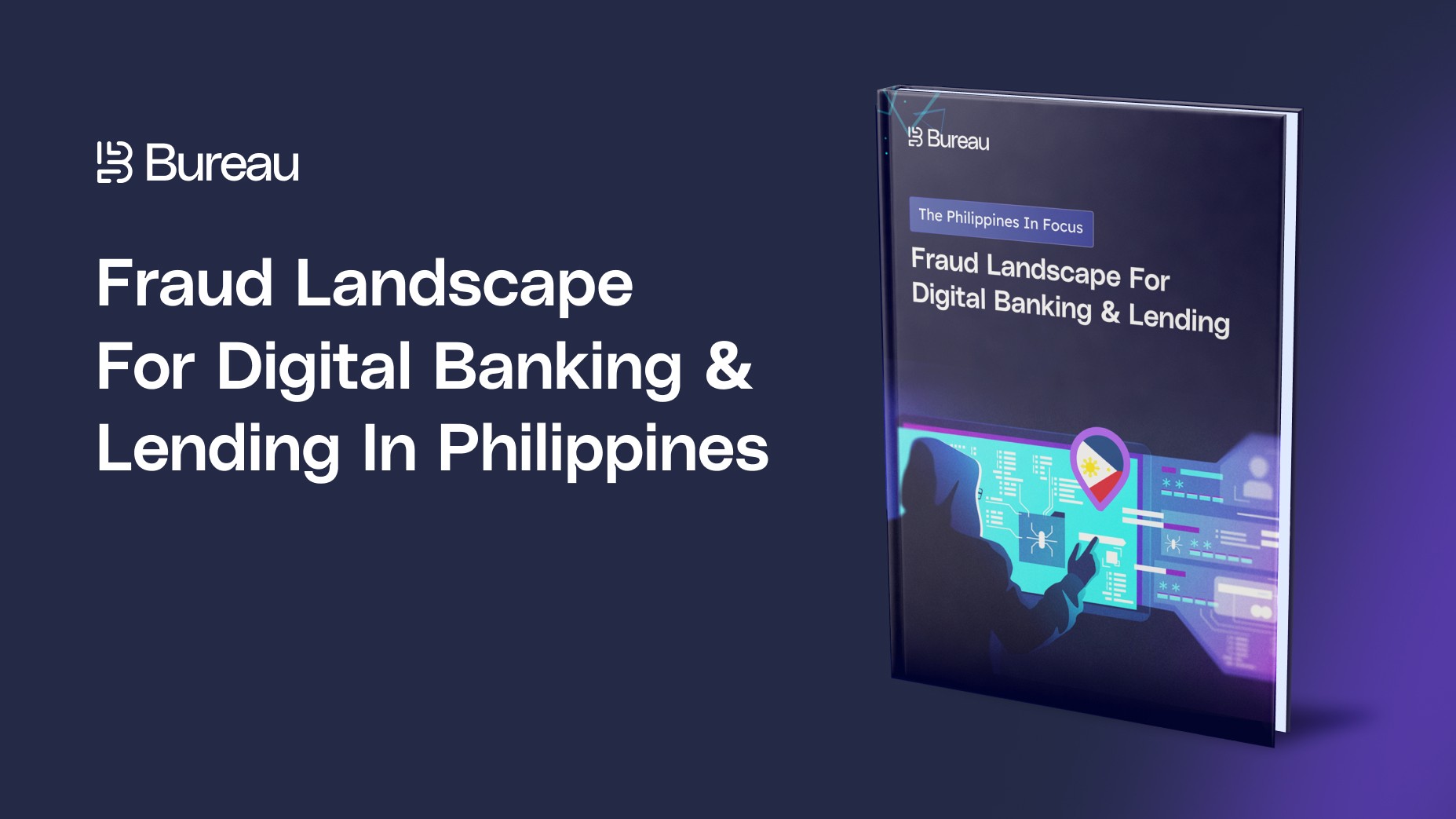

See how Bureau has helped industry leaders defend against networked Industrial-scale frauds →
Schedule a Demo
TABLE OF CONTENTS
See Less
The Philippines is embracing the digital revolution. Filipinos are increasingly turning to online banking and lending platforms for convenience and speed. However, this progress casts a shadow – a surge in online financial fraud (113% in 2023). Fraudsters are exploiting the growing popularity of fintech service provider platforms, targeting both Filipinos seeking financial services and the institutions themselves.
In Manila and Cebu, fraudsters exploit identity theft through device compromise, using phishing and malware to facilitate fraudulent loan applications. In cities like Quezon City and Makati, loan stacking across multiple locations and fake employment verification undermine the integrity of the loan process. Device cloning enables unauthorized account access and fund manipulation in financial hubs such as Taguig, while phishing scams and credit score manipulation deceive risk assessment systems. Collusion between borrowers and agents compromises loan approvals in urban areas, and account hijacking redirects funds to fraudulent accounts.
This hinders the planned exit from the FATF grey list by 2025.
The delay will continue to limit foreign investment and the overall financial health of the Philippines, making this a major priority. However, stricter AML/CFT regulations necessary for this require a more robust system for combating fraud.
Traditional defenses against financial fraud, such as static rules-based systems and manual oversight, have proven inadequate in the face of increasingly sophisticated and dynamic threats. These conventional methods are often reactive, struggling to keep pace with the evolving tactics of fraudsters who exploit regulatory loopholes, device vulnerabilities, and social engineering techniques.
The limitations of these defenses highlight the urgent need to incorporate artificial intelligence (AI) into fraud prevention strategies. AI can analyze vast amounts of data in real-time, identifying patterns and anomalies that humans might miss. Machine learning algorithms can continuously adapt to new fraud tactics, improving detection and response times. By leveraging AI, fintech providers can enhance their ability to anticipate and counteract fraud, ensuring a more secure and resilient financial ecosystem.
In this free report, financial leaders in the Philipinnes will explore how to:
Bridge the gap for the massive unbanked population (45%) in the Philippines and the lucrative market opportunity that this presents. This eBook equips you with insights to reach this segment, including SMEs and small borrowers.
Battle the surging online financial fraud (113% increase) that hinders user adoption and dampens the Fintech industry's potential. This eBook explores effective strategies, including AI-powered solutions (behavioral biometrics, device fingerprinting), to combat fraud and build trust with Filipino consumers.
Navigate stricter AMLC regulations and securing a place out of the FATF grey list. This eBook guides you to partner with regulators and stakeholders to create a robust and secure digital financial ecosystem for the Philippines.
?

The Philippines is embracing the digital revolution. Filipinos are increasingly turning to online banking and lending platforms for convenience and speed. However, this progress casts a shadow – a surge in online financial fraud (113% in 2023). Fraudsters are exploiting the growing popularity of fintech service provider platforms, targeting both Filipinos seeking financial services and the institutions themselves.
In Manila and Cebu, fraudsters exploit identity theft through device compromise, using phishing and malware to facilitate fraudulent loan applications. In cities like Quezon City and Makati, loan stacking across multiple locations and fake employment verification undermine the integrity of the loan process. Device cloning enables unauthorized account access and fund manipulation in financial hubs such as Taguig, while phishing scams and credit score manipulation deceive risk assessment systems. Collusion between borrowers and agents compromises loan approvals in urban areas, and account hijacking redirects funds to fraudulent accounts.
This hinders the planned exit from the FATF grey list by 2025.
The delay will continue to limit foreign investment and the overall financial health of the Philippines, making this a major priority. However, stricter AML/CFT regulations necessary for this require a more robust system for combating fraud.
Traditional defenses against financial fraud, such as static rules-based systems and manual oversight, have proven inadequate in the face of increasingly sophisticated and dynamic threats. These conventional methods are often reactive, struggling to keep pace with the evolving tactics of fraudsters who exploit regulatory loopholes, device vulnerabilities, and social engineering techniques.
The limitations of these defenses highlight the urgent need to incorporate artificial intelligence (AI) into fraud prevention strategies. AI can analyze vast amounts of data in real-time, identifying patterns and anomalies that humans might miss. Machine learning algorithms can continuously adapt to new fraud tactics, improving detection and response times. By leveraging AI, fintech providers can enhance their ability to anticipate and counteract fraud, ensuring a more secure and resilient financial ecosystem.
In this free report, financial leaders in the Philipinnes will explore how to:
Bridge the gap for the massive unbanked population (45%) in the Philippines and the lucrative market opportunity that this presents. This eBook equips you with insights to reach this segment, including SMEs and small borrowers.
Battle the surging online financial fraud (113% increase) that hinders user adoption and dampens the Fintech industry's potential. This eBook explores effective strategies, including AI-powered solutions (behavioral biometrics, device fingerprinting), to combat fraud and build trust with Filipino consumers.
Navigate stricter AMLC regulations and securing a place out of the FATF grey list. This eBook guides you to partner with regulators and stakeholders to create a robust and secure digital financial ecosystem for the Philippines.
?
TABLE OF CONTENTS
See More
Recommended Blogs


Landing Page.
Simple, bold.
Sign Up
Download

Products
Solutions


© 2026 Bureau . All rights reserved.
Solutions
Industries
Resources
Company
Solutions
Industries
Resources
Company
© 2026 Bureau . All rights reserved.
Follow Us
Leave behind fragmented tools. Stop fraud rings, cut false declines, and deliver secure digital journeys at scale
Our Presence








Leave behind fragmented tools. Stop fraud rings, cut false declines, and deliver secure digital journeys at scale
Our Presence
© 2026 Bureau . All rights reserved.