How Geopolitical Crises Like India-Pakistan Tensions Fuel Digital Fraud
How Geopolitical Crises Like India-Pakistan Tensions Fuel Digital Fraud
How Geopolitical Crises Like India-Pakistan Tensions Fuel Digital Fraud
In any global crisis, whether war, pandemic, or economic shock, scammers are quick to exploit fear and uncertainty through deepfakes, scams, and phishing.
Author
Rahi Bhattacharjee


See how Bureau has helped industry leaders defend against networked Industrial-scale frauds →
Schedule a Demo
TABLE OF CONTENTS
See Less
With tensions between India and Pakistan reaching a peak in recent days, the emotional charge across social and digital spaces has been intense. There’s tension on the borders, but fraud is borderless. Even as diplomatic efforts now signal a possible ceasefire and a path to stability, this moment must serve as a stern reminder: in times of crisis, fraudsters circle like opportunistic vultures.
?
“People are hungry for updates, eager for new information, and constantly refreshing their feeds. This creates a perfect storm: when emotions run high, judgment often runs low, and people become more vulnerable to clicking on fake alerts, sensationalist headlines, or forwarded messages that mask phishing attempts, malware, or financial scams.”
— Venkat Srinivasan, Chief Analytical and Risk Officer, Bureau
?
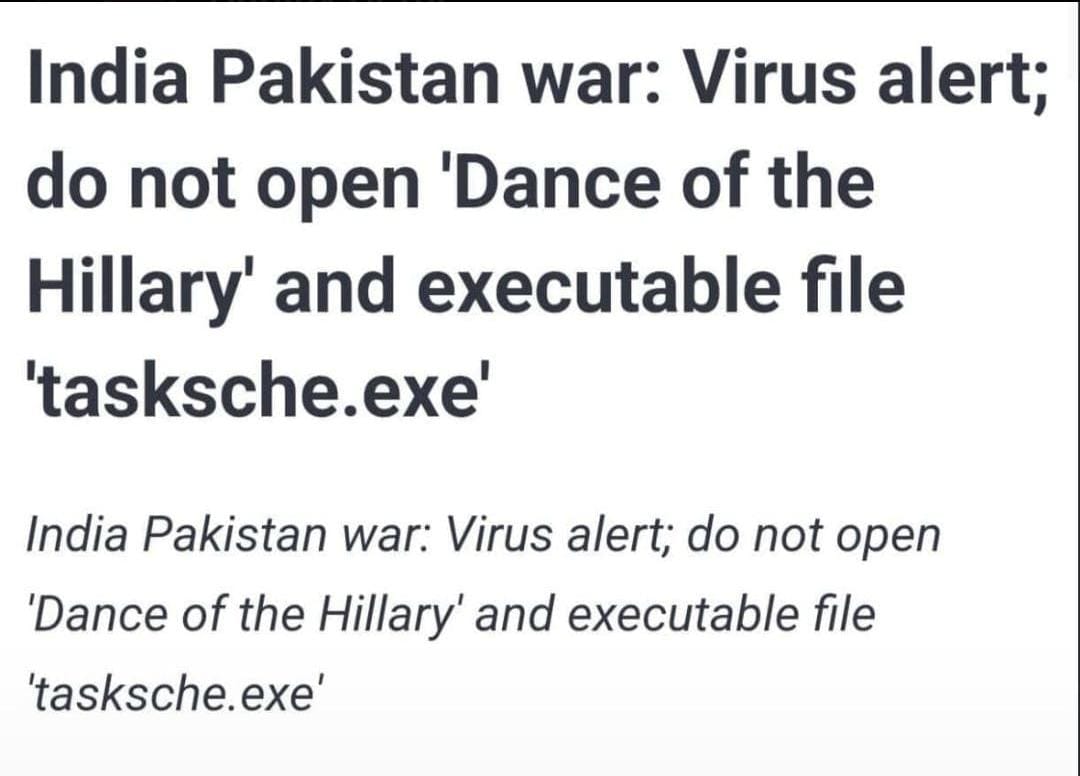
Already, images showing dangerous links and fake news posts have been actively circulating, amplifying the risk.
?
?
?
Critical precautions for users and financial institutions
As a thought leader in identity and fraud prevention, Bureau emphasizes that crisis resilience is not optional. fraudsters have a long history of feeding on crisis Fraudsters thrive on moments of distraction, emotional stress, and uncertainty, making individual users more vulnerable than usual. At the same time, the responsibility does not fall on users alone.
Financial institutions, fintechs, and digital platforms carry a parallel duty: to proactively shield customers with advanced fraud prevention tools, real-time detection systems, and clear public communications.
5 ways fraudsters exploit crisis - And how you can stay safe
1. They Use Emotional Urgency to Cloud Your Judgment
Scammers create panic — “act now or lose everything” — making you rush decisions without thinking. Slow down. Take a breath. Never act on pressure alone.
2. They Turn Personal Data Into Convincing Deepfakes
Fraudsters already have leaked or stolen data. If they know you have a relative near the border, they can fake a video or voice message asking for urgent help. Always call back on a verified number — never trust what you see or hear without checking.
3. They Trick You Into Sharing OTPs or Passwords
No bank, no government body, no friend will ask you for your OTP, PIN, or password over phone, email, or chat. Never share it — no matter how real the request sounds.
4. They Hijack Real News to Launch Phishing Attacks
Scammers mirror breaking headlines, sending fake alerts or links that look official. Be careful: only trust updates from verified news outlets and official government channels.
5. They Create Doubt and Confusion
By mixing truth and lies, fraudsters make you second-guess yourself. Stay calm. Check details carefully. When in doubt, verify with official sources or call back trusted contacts.
?
What Financial Institutions should do right now
Strengthen Customer Communication:
Push multi-channel PSAs reminding customers: no OTPs, no passwords, no emergency fund transfers.
Enhance Transaction and Behavioral Monitoring:
Use real-time analytics to flag:
High-risk geographies
Sudden peer-to-peer spikes
Device or session anomalies
Trigger dynamic risk-based authentication when needed.
Prepare for Social Engineering and Deepfake Threats:
Deploy voiceprint analysis, graph-based device mapping, and internal override checks to block fraud rings exploiting emotional crisis narratives.
?
The road ahead:
Encouragingly, Indian banks, stock exchanges, and digital payment providers moved quickly. Public advisories were issued, real-time monitoring was tightened, and fraud detection tools were deployed to track suspicious activity.
Punjab National Bank (PNB) set up a 24×7 cybersecurity “war room” to neutralize threats in real time. BSE and NSE had restricted international access to their website, with BSE reinforcing its role in continuous global cyber risk monitoring.
These are the right moves — but speed alone is not enough.
To stay ahead of increasingly adaptive threats, we need structured, real-time collaboration across financial institutions, regulators, and regtech partners. This includes:
Shared threat intelligence
Faster escalation protocols
Integrated response systems that go beyond siloed defenses
RegTechs play a critical role here, bringing the agility, infrastructure, and signal intelligence needed to help institutions respond not just swiftly, but smartly.
?
Global crisis: An opportunity for fraud
Across pandemics, wars, and economic downturns, one pattern is clear: opportunistic fraud surges during global crises. Real-world data from the past two decades confirm, from soaring scam losses during COVID-19 to charity frauds amid wars and spikes in financial crimes during recessions .
Officials estimate the U.S. alone lost over $100 billion in pandemic unemployment aid to fraud, much of it through identity theft. According to cybercrime intelligence firm Fiverity, the criminal economy thrives on volatility, adapting quickly to exploit fear with fake promises, phishing schemes, and false “guaranteed returns.”
History reveals one thing undisputable: in every crisis, fraud doesn’t just survive; it multiplies. And it's up to us to defend against it.
?
With tensions between India and Pakistan reaching a peak in recent days, the emotional charge across social and digital spaces has been intense. There’s tension on the borders, but fraud is borderless. Even as diplomatic efforts now signal a possible ceasefire and a path to stability, this moment must serve as a stern reminder: in times of crisis, fraudsters circle like opportunistic vultures.
?
“People are hungry for updates, eager for new information, and constantly refreshing their feeds. This creates a perfect storm: when emotions run high, judgment often runs low, and people become more vulnerable to clicking on fake alerts, sensationalist headlines, or forwarded messages that mask phishing attempts, malware, or financial scams.”
— Venkat Srinivasan, Chief Analytical and Risk Officer, Bureau
?
Already, images showing dangerous links and fake news posts have been actively circulating, amplifying the risk.
?
?
?
Critical precautions for users and financial institutions
As a thought leader in identity and fraud prevention, Bureau emphasizes that crisis resilience is not optional. fraudsters have a long history of feeding on crisis Fraudsters thrive on moments of distraction, emotional stress, and uncertainty, making individual users more vulnerable than usual. At the same time, the responsibility does not fall on users alone.
Financial institutions, fintechs, and digital platforms carry a parallel duty: to proactively shield customers with advanced fraud prevention tools, real-time detection systems, and clear public communications.
5 ways fraudsters exploit crisis - And how you can stay safe
1. They Use Emotional Urgency to Cloud Your Judgment
Scammers create panic — “act now or lose everything” — making you rush decisions without thinking. Slow down. Take a breath. Never act on pressure alone.
2. They Turn Personal Data Into Convincing Deepfakes
Fraudsters already have leaked or stolen data. If they know you have a relative near the border, they can fake a video or voice message asking for urgent help. Always call back on a verified number — never trust what you see or hear without checking.
3. They Trick You Into Sharing OTPs or Passwords
No bank, no government body, no friend will ask you for your OTP, PIN, or password over phone, email, or chat. Never share it — no matter how real the request sounds.
4. They Hijack Real News to Launch Phishing Attacks
Scammers mirror breaking headlines, sending fake alerts or links that look official. Be careful: only trust updates from verified news outlets and official government channels.
5. They Create Doubt and Confusion
By mixing truth and lies, fraudsters make you second-guess yourself. Stay calm. Check details carefully. When in doubt, verify with official sources or call back trusted contacts.
?
What Financial Institutions should do right now
Strengthen Customer Communication:
Push multi-channel PSAs reminding customers: no OTPs, no passwords, no emergency fund transfers.
Enhance Transaction and Behavioral Monitoring:
Use real-time analytics to flag:
High-risk geographies
Sudden peer-to-peer spikes
Device or session anomalies
Trigger dynamic risk-based authentication when needed.
Prepare for Social Engineering and Deepfake Threats:
Deploy voiceprint analysis, graph-based device mapping, and internal override checks to block fraud rings exploiting emotional crisis narratives.
?
The road ahead:
Encouragingly, Indian banks, stock exchanges, and digital payment providers moved quickly. Public advisories were issued, real-time monitoring was tightened, and fraud detection tools were deployed to track suspicious activity.
Punjab National Bank (PNB) set up a 24×7 cybersecurity “war room” to neutralize threats in real time. BSE and NSE had restricted international access to their website, with BSE reinforcing its role in continuous global cyber risk monitoring.
These are the right moves — but speed alone is not enough.
To stay ahead of increasingly adaptive threats, we need structured, real-time collaboration across financial institutions, regulators, and regtech partners. This includes:
Shared threat intelligence
Faster escalation protocols
Integrated response systems that go beyond siloed defenses
RegTechs play a critical role here, bringing the agility, infrastructure, and signal intelligence needed to help institutions respond not just swiftly, but smartly.
?
Global crisis: An opportunity for fraud
Across pandemics, wars, and economic downturns, one pattern is clear: opportunistic fraud surges during global crises. Real-world data from the past two decades confirm, from soaring scam losses during COVID-19 to charity frauds amid wars and spikes in financial crimes during recessions .
Officials estimate the U.S. alone lost over $100 billion in pandemic unemployment aid to fraud, much of it through identity theft. According to cybercrime intelligence firm Fiverity, the criminal economy thrives on volatility, adapting quickly to exploit fear with fake promises, phishing schemes, and false “guaranteed returns.”
History reveals one thing undisputable: in every crisis, fraud doesn’t just survive; it multiplies. And it's up to us to defend against it.
?
TABLE OF CONTENTS
See More
Recommended Blogs


Landing Page.
Simple, bold.
Sign Up
Download

Products
Solutions


© 2026 Bureau . All rights reserved.
Solutions
Industries
Resources
Company
Solutions
Industries
Resources
Company
© 2026 Bureau . All rights reserved.
Follow Us
Leave behind fragmented tools. Stop fraud rings, cut false declines, and deliver secure digital journeys at scale
Our Presence








Leave behind fragmented tools. Stop fraud rings, cut false declines, and deliver secure digital journeys at scale
Our Presence
© 2026 Bureau . All rights reserved.